 Est. 2008; bringing nature & gardeners together Jan 30, 2026
|
|
NURSERY NOTES: If your new year's fitness resolutions are still holding up, you could skip the gym on the morning of Feb 6, and head instead to TreeFolks nursery for some "TreeRobics." The task? Unload and label 1,200 5 gallon trees, getting them ready for distribution. TreeFolks 🌿
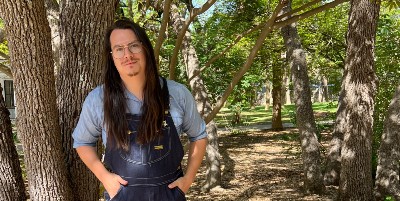 "Peas, Trees & Fungi" is a training session for educators at Cunningham Elementary School on Feb 7 from 9 - noon. Teaching students about how to keep trees in good health will be the focus. Central Texas Mycological Society and PEAS Community Farm are working jointly on this. Austin Davenport (above) is one of the presenters. PEAS 🌿
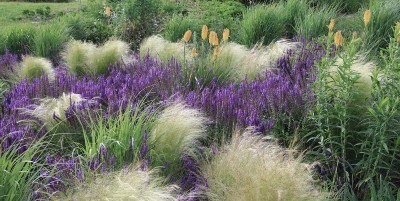
NATURALISTIC PLANTING TIPS: to create a beautiful, natural-looking garden, look at how plants create layers in the natural world, and copy them, urges Jared Barnes. He has studied the works of Piet Oudolf and Nigel Dunnett and others extensively, and offers a window into the artistry of their designs and craft. Meristem ❦
______________________________________________
MAKE YOUR OWN COTTAGE GARDEN PATH: "What is a cottage garden without a charming garden pathway?" asks writer Tracy Crosland. Some options she suggests are stepping stone paths, brick pavers, gravel, and mulch. Hey Honeysuckle ❦
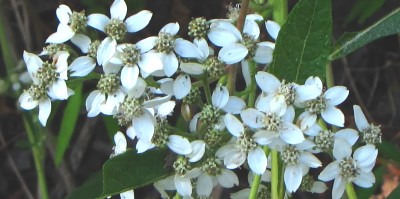
PLANT OF THE MONTH - FROSTWEED: The Native Plant Society's choice (fittingly!) is Verbesina virginica. This deciduous perennial grows 1 - 2 feet tall, likes part-shade - shade, and has a low to medium thirst for water. There's some drama to this plant too: "Early in the morning of the first hard freeze, stems split open to expose long curls of ice." NPS ❦
______________________________________________
WINTER SQUASH COCONUT MILK SOUP: when gardener Margaret Roach ended up with "a houseful of squash," she got busy in the kitchen and came up with this fine recipe for a winter's eve. A Way to Garden ❦
THE AUSTIN GARDEN relies on readers for support. Whether annual or monthly, all donations are welcome. At present 7 % of readers fund this newsletter. Many thanks in advance. PayPal link ❦
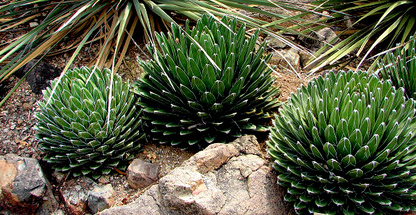 Queen Victoria agaves are a favorite
Guide to Curb-side Gardening
by Chris Winslow
"What should I do with the strip of ground between the curb and side-walk in front of my house?" This was a common question for me as a nurseryman in Austin.
Traditionally this area is covered with turf grass. However with its location next to the concrete curb, pavement and sidewalk, it is a harsh environment for just about anything to grow in. It is just about the hottest and driest part of the landscape.
With water restrictions and new irrigation laws in effect (such as no overspray on hardscapes), grass stands little chance of survival.
My plan would be to remove the grass. Next add some compost to the native soil, and, once the weather warms up, plant low-growing, water-wise native and, adaptive species.
As usual it is a good idea to consult a copy of the Native and Adapted Landscape Plants for a myriad of suggestions.
Always keep in mind the mature sizes of plants. Since this new bed is bordered by street and sidewalk, large, overhanging plants would create traffic problems on both sides. Only choose thorny plants if they are dwarf, and are kept in the center.
This area can be planted sparsely and retain an appealing look. Pick plants with an interesting architecture. Their looks can be enhanced by mulching with decomposed granite or colorful gravels.
Another idea is to define planting areas by adding a faux riverbed of colored river stone. This can snake and serpentine its way between curb and sidewalk with pocket planting throughout.
My favorite small plants with great architectural form are Queen Victoria agave, artichoke agave, and red yucca. These three can form the evergreen backbone of the planting, with additional low-growing flowers placed between and around them… such as black-foot daisy, four nerve daisy, pink skullcap, purple coneflower, weeping lantana, homestead verbena, cedar sage, green and grey santolena, and bulbine.
There are also some lovely culinary herbs that would also perform well in this area: creeping rosemary, sage, Greek oregano, chives, thyme, and Mexican mint marigold. Hope these suggestions are helpful as you plan your 2026 garden. Happy gardening everyone! ❦
 |
|
IT'S ABOUT THYME LEGACY PUBLICATIONS.
CONTACT EDITOR DARREL MAYERS |
|
|