Meredith Sue Willis's
Books for Readers # 231
Jan 15, 2024
Back Issues MSW Home About Meredith Sue Willis Contact
Read this newsletter in its permanent location
Spring 2024--MSW is teaching
Novel Writing at NYU-SPS
By Zoom: NYU WRIT1-CE9357001
Wednesday Evenings
2/21/24 - 4/24/24
Terrific new and upcoming publications:
Translations by Marc Kaminsky;
Poems by Ernie Brill;
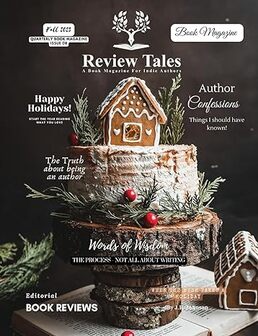
New Issue of Review Tales; and
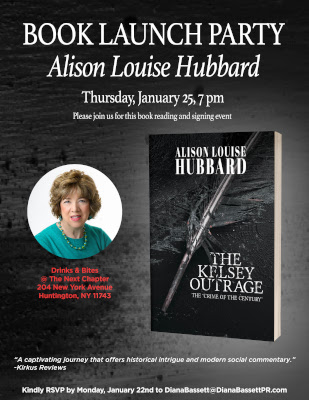
Alison Louise Hubbard's new novel The Kelsey Outrage plus book launchI!
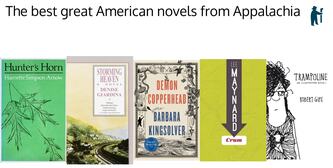
Also take a look at Shepherd.com for a new source of ideas for what to read next. I have a list of the Best Great American Novels from Appalachia.
Back Issues
Announcements
Book Reviews
Especially for Writers
Good Stuff Online & Elsewhere
BOOK REVIEWS
This list is alphabetical by book author (not reviewer).
They are written by MSW unless otherwise noted.
A Clockwork Orange by Anthony Burgess
Razorblade Tears by S.A.Cosby
Long Way Home by Eva Dolan
The Jailing of Cecilia Capture by Janet Campbell Hale
Bride of the Rat God by Barbara Hambly
Star Wars: Children of the Jedi by Barbara Hambly
Following the Silence by Marc Harshman
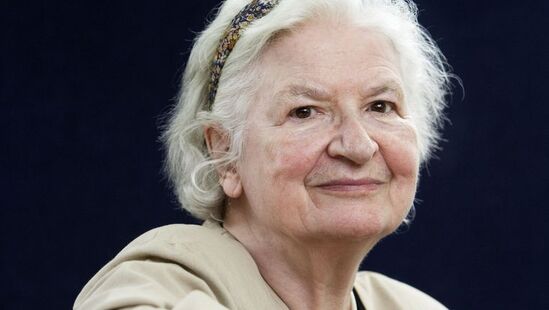
The Private Patient by P.D. James
The Blind Side by Michael Lewis
Miss Marjoribanks by Mrs. Oliphant (Margaret)
The Clay Urn: A Novella by Paul Rabinowitz
Birthright by Nora Roberts
To Free the Captives: A Plea for the American Soul
by Tracy K. Smith Reviewed by Dreama FriskOh William! by Elizabeth Strout
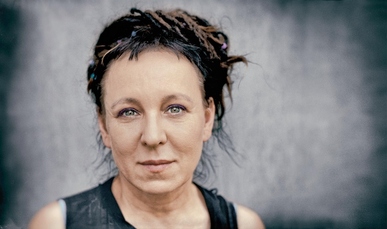
Primeval and Other Times by Olga Tokarczuk
You can tell I haven't been teaching for several weeks because I've been reading everything that comes my way. I have reactions here to a Barbara Hambly silver screen mystery (Bride of the Rat God) and her early spin-off of Star Wars as well as to a book by contemporary crime writer S.A. Cosby. I read a romance novel by Nora Roberts and Marc Harshman's latest book of poetry, one of Elizabeth Strout's tender stories about the varieties of love, and an excellent popular history of the Triangle Shirtwaist Fire in 1911. I also read my first work by Nobel Prize winner Olga Tokarczuk and reread my old professor Anthony Burgess's big success A Clockwork Orange. Continuing in a British mood, I read a P.D. James and discovered a new (to me) Victorian author, Mrs. Margaret Oliphant.
These books came from recommendations in this newsletter or were gifts or, e-books borrowed from the public library, or books suggested by students in my classes and members of my writer groups. I also found a new book-list website called Shepherd.com.
As always--I'm looking for more. Please send reviews and/or short takes on what you've been reading!
The Blind Side by Michael Lewis
Let me begin by saying that Michael Lewis is really good at what he does, which is explaining things and telling a story that shows the things he explains in human terms. My son is a fan of Lewis's work and recommended The Blind Side to me. I never saw the movie, but the book is very good. I even watched bits of a football game on t.v. last night with better understanding after reading it. However little you care about football, it is hard not be engrossed in what Lewis has to say about the revaluing of offensive linemen, particularly the left tackle whose job is to protect his quarterback from the thundering herd of defenders coming to smash him to bits while he looks for a place to throw the ball.
The left tackle, says Lewis, needs a particular physique: very tall and broad, but also extremely fast and quick on his feet. This becomes necessary background for the second thread of the book, which is about recruiting college students who are perfect specimens of what the NFL needs, which often means finding the right high school students and getting them into the right colleges. The system thus turns a certain subset of children into a kind of meat market that results in a recruiting feeding frenzy that really, really made me hate American football. I understand that all sports is big business, and that all big business is about making big money. The athletes certainly deserve a cut of the pot-- but I am appalled by how young boys are funneled into a system that is so extremely destructive to knees and hips and brains of those who play the game.
The third thread of the book is about what the athletes get out of this, and how that is related to race and poverty, and in particular about Michael Oher, the young black man from one of the poorest zip codes in the nation who was famously taken up by a white family, the Tuohys. I won't try to summarize Michael’s story or for that matter the Tuohys’s story: I recommend the book, highly, and the complexities of who the people are and who they are to each other is the best reason to read it. Sean Tuohy’s wealth, for one thing, is not old money but his own wealth built on his own sports career. And he is apparently often on the verge of losing it. Leigh Anne Tuohy is an ex-cheerleader who just loves poor Michael and really teaches him a tremendous amount about surviving the white, affluent, Evangelical Christian world of East Memphis, Tennessee. A final fascinating thread here is this world of evangelical private schools that were created to a large extent to avoid integration of the schools.
Throughout you get whiffs of what led Michael, after his retirement from the NFL to write memoir-self help books, and in 2023, to sue his white “family” for misleading him and not sharing proceeds from the movie version of The Blind Side with him. Part of what he speaks against is the portrayal of his character in the movie as not intelligent. In fact he appears to be a very clear-eyed and shrewd operator himself. It’s never totally clear who is hustling whom in this book.
So the story is about the Tuohys and Michael Oher and the NFL and football strategy and college recruiters, and the story is ongoing, problematic, and depressing. This kid who was never taught to read but who has perfect body type for a particular football position becomes the center of wild recruiting from the colleges down south.
There is a whole other part of the background that deserves its own book, about the separatist school system for wealthy white Christians and the religious fervor for college football teams Of course, we're in the twenty-first century now and southern racism is soft: the Ole Miss Rebels just love their big ol' black athletes.
Boy do I hate American football.
Here are a couple of reviews of Michael Oher's two memoirs.
Long Way Home by Eva Dolan
This is a Crime novel starring Detectives Zigic and Ferreira of the Hate Crimes Group in Peterborough, U.K., a city famous (and toured
as) the set for the BBC series based on Anthony Trollope's Barchester novels, now home to many emigrants and many exploiters of this work force: women are brought over from Eastern Europe to be waitresses and pushed into sex slavery, men are given laboring jobs at locations where they are treated as prisoners, and sometimes, when they don't follow the ruled, brutally beaten–or disposed of more simply and fatally.
In this novel, a man is burnt alive horribly in a shed, and there are apparently plenty of suspects, including his own family, who don't like him very much. It's grittier than it is gory, and Zigic and Ferreira, both immigrants or children of immigrants themselves, are somewhat depressed personalities, but determined to find the killer.
Nicely written, a new background for me, prejudice and violence in Britain against Eastern European and Portuguese immigrants.
The Jailing of Cecilia Capture by Janet Campbell Hale
I don't know who recommended this to me, but it turns out Hale is my age mate and died of Covid two years ago. I'm so sorry, because this stolid and deeply moving story made me feel close to her.
She wrote a number of y.a. and other books, not as many as you might expect by her age, so I kept wondering what challenges she had in her life. But this book is lovely enough all alone.
It's the story of a young woman whose father insisted that learning and lawyering would save indigenous Americans, and she internalizes this, lives with his alcoholism and her mother's arthritis and nastiness and general unhappiness. Cecilia has a child as a teenager, then a bad marriage and a second child, and is full of rage at her parents and her husband and white America. Still, she scrambles her way to a college degree and then on to law school where she gets arrested for drunk driving and is caught up in a ten year old arrest warrant for welfare cheating at a desperate time in her life.
The structure of the novel is simply Cecilia in jail waiting over a long few days including a week-end to be arraigned and disposed of, and as she sobers up remembering her whole life, her father and children, her bitter mother, her love affairs and her marriage. Then, after a somewhat self-dramatizing effort to kill herself, which Hale knows this vital woman would have been highly unlikely to do, she moves on with her life. We don't know the outcome, but we have deep insight into what she had experienced that brought her here.
The Clay Urn: A Novella by Paul Rabinowitz
This small book focuses on scenes from the lives of two young Israeli lovers during the first intifada, when there were frequent suicide bombings and other suicide attacks by Palestinians on civilian Israelis. Both of the main characters have had deep losses, both are shown during their time in the army and how it changes them.
The young man has flashbacks to his time doing private archaeological digs in the hills with his father. This is the source of the ancient clay urn his family owns. The woman, who is a visual artist, has a section when she is trying a different life in New York City. There is a gathering sense that something terrible is going to happen, both from the tone of the story and, appropriately, from the historical background. A Palestinian man is stopped an humiliated by Israelis soldiers; there is a failed night raid that involves this same family, whose son is part of the intifada. There is a horrific multiplying of hate and revenge at the end, which as we know, is hardly over now.
Yes, the story feels horribly timely. It is alight with conviction and empathy. The viewpoint is almost entirely Israeli, but the changes wrought on the people and their efforts to remain humane in the face of war rend your heart.
Following the Silence by Marc Harshman
This new collection of poems by Marc Harshman, the poet laureate of West Virginia, is, like all his work, important, strong, and engrossing. He begins with ghosts– “the dead, whom we know would return/if only we quit trying so hard” in “August Ghosts” (p. 3) and a tumble down old farm in “How the Ending Begins” in which it is “Hard to imagine the extravagance or order/when the simplicity of ruin/is everywhere evident.” (p 7).
The volume has a lot of endings but also a lot of staying put and cultivating patience. Many poems begin with powerful concreteness that proves to be far less simple than it appears. “Lines” opens with short lines of observation--a falcon that “draws a line/directly across the high clouds” and a “a door opening outwards/like a handshake”(p. 56). The journey to that welcoming door proves to be difficult. The narrator can see the house, but walks miles before asking directions and studying the lines of his own palms. In the end, he reaches the house, and there is a painting that leads “back through time into/this almost familiar present.” These are dream insights, and many of the poems have a great deal of dream and spiritual mystery that burgeons out of the simplest observations. “A Man” starts with sunlight on a brick church and coffee steaming in a white cup. Which leads to this stunning passage:
The coffee grows cold, the prayers gounanswered but the fields are important,
their old earth hungry
with an urgent longing to be worked
even as the songs slip unnoticed
through the singing wires.
(p. 63)
Honestly, I don’t know precisely what this means in any linear, logical sense, but you feel that you have been there with Harshman, and seen the vision.There are more quotidian, sunnier poems, especially toward the end: a wonderful true-to-life narrative “Poet in the Schools” that captures what it’s like to bring poetry to a crowd of not fully receptive students, and one called “Mathematics” that is about the poet’s relationship with that discipline. Harshman also explores a pervasive spirituality, as in “Not All That Much” in which he prays “without thinking God or prayer,/pray by simply staying put, letting/time fall away....” (p. 72)
It’s a thick, deep, and uplifting collection.
A Clockwork Orange by Anthony Burgess
So much funnier than I remember from when I read it fifty years ago or so. Then I pretended the violence didn’t bother me, but I was pretending. I did a lot of pretending back then, as I held onto ideological ropes to keep myself oriented. Now, though, old and crotchety, I find it a total hoot, in spite of its didactic core, which carries the simple message People Need Choice.
But the pleasure of the novel isn't about messages. Burgess cleverly makes you end up complicit with the violence perpetrated by “little” Alex. Everything is distanced nicely by the language, which is the overwhelming point.
I read the book as part of my continuation of the short novel guide (Kenneth C. Davis's Great Short Books: A Year of Reading--Briefly). I didn't get it the first time, which I think was when Burgess was my workshop leader.The speculative fiction part still isn’t terrific, but it’s not all that important either (I did like the idea of Milk Plus Bars, which are milk plus drugs.)
It is thoroughly a sound book. Burgess was famously nearsighted, so the world of the novel is built on the sound of music and language. The fake Russian slang is never really explained, and the people in power are pretty straight near-future British. So how was the slang brought to the young droogies? Not clear, and he offers some kind of explanation in a throwaway line of dialogue, but I don't think he really cared. And it doesn't matter: it sounds totally horrorshow! And Alex ends up sympathetic, of course, in spite of everything.
This (1986?) edition has the final chapter that Burgess’s American publisher cut. The witty introduction by Burgess theorizes about why--that is was some kind of macho American fetish for toughness that precludes a violent boy from changing by choice, as opposed to brainwashing. The final chapter, then, has Alex rather sadly outgrowing his brutal hooliganism. It’s not nearly as much fun as the rest of the book, and also a far greater punishment for little Alex (Oh my brothers!) than imprisonment or pain.
A lot of my pleasure related to remember a time in my life when I was in Burgess's seminar. I was angry a lot of the time, especially at his disdain for beginning writers, above all female beginning writers. I also remember a nasty joke he passed on from Ringo Starr about a man with a girlfriend who had a hunchback.
I don't think I knew back then that his real life first wife was the victim of a rape by AWOL American soldiers. She miscarried shortly after that, and years later died of alcoholism. Which doesn't prove anything, except that Burgess knew something about violence.
Razorblade Tears by S.A.Cosby
This is a best selling crime novel by a relatively new writer. It came out in summer 2021. Cosby is often compared to Elmore Leonard. It is indeed like the crime master in its clarity of style and strong dialogue.
Two not-quite-elderly but getting there ex-cons are brought together over the dual murder of their two sons, who were married and the fathers of a three year old girl. Ike, who used his natural rage to turn himself into a stone-cold killer in prison, is Black. He has created a large landscaping business and is a considerable success, albeit suffering over the loss of his son–a loss that goes back to homophobia and anger long before the murder.
The other man,white, is Buddy Lee, also regretting his frequent estrangements from his son. He is a sort of Appalachian-foothills piece of hard drinking trailer trash who drags Ike into a search for the killers of their sons.
Cosby does a great job with both of these men, and with a host of other minor and major characters including a vicious but bumbling white supremacist motorcycle club. I liked this, in spite of a certain uneasiness about the way it gets us hooting and hollering in support of Ike and Buddy Lee slaughtering a few dozen of the guilty. This is also Elmore Leonardish, in that everything is ready for the movie or Netflix series. The book has long since been optioned, of course. Part of the fun is figuring out who's going to play Ike and Buddy Lee.
It's just that there is a disconnect for me: I like these guys so much, and appreciate the honesty of Cosby's treatment of their cultural homophobia and also their deep love of their sons. And then they turn out to be over-the-top killers. I understand that this is a lot of what sells this particular genre, especially to the movies, but I'd like to see what Cosby does with a little more realism, because he is a really good writer.
For other reviews, check out Carole V. Bell on NPR ( https://www.npr.org/2021/07/06/1012647702/two-fathers-risk-it-all-to-avenge-their-murdered-sons-in-this-new-thriller) and Adam Sternbergh in the New York Times (https://www.nytimes.com/2021/07/03/books/review/razorblade-tears-s-a-cosby.html and https://www.nytimes.com/2021/09/05/books/s-a-cosby-razorblade-tears-crime-novelist.html
Primeval and Other Times by Olga Tokarczuk
Tokarczuk is a best-selling Polish Nobel Prize winner. This first of her books I've read is often described as mythological or like a fable, but that doesn't capture it for me. There are, yes, touches of magic or the supernatural, but they seem to have more to do with the traditional and idyosyncratic attempts by the villagers of Primeval to understand the world.
The book is made up of short (a page to maybe four page) sections called “The Time of...,” usually followed by the name of a character. Primeval is their village. There are a lot of clever stories about the dominance of mushroom spawn and the non-conscious consciousness of trees and a perhaps magical barrier that stops certain people from leaving the village–oh, and a grouchy not-very-successful Creator known as God whose passages come mostly during descriptions of a board game played obsessively by one of the characters. This all sounds a little whimsical, but it floats lightly on a firm ground of very real and painful twentieth century history and how it played out on the people of Primeval.
We go essentially from the First World War through the Polish Solidarity movement of the nineteen eighties. During the Second World War the villagers camp in the forest and are occasionally killed and raped by alternating waves of Nazi and Soviet soldiers.
There are a lot of good characters like Izydora with his drooling and physical limitations even as his mind makes theories and plans and falls in love. He discovers that he can earn money by appealing to the post office of Poland and other countries for lost letters. He also becomes the target of police for possible spying, and later creates a meaning-system based on the recurrence of things in fours. One character disappears early on and is referred to mostly for not coming home ever, and at the very end we find out why she didn’t come back, and the reason is at once mundane and deeply true.
None of these bits and references capture the greater whole of this book which is brilliantly accomplished and also unexpectedly reassuring about how we are all part of creation.
Miss Marjoribanks by Mrs. Oliphant
In reading Miss Marjoribanks (1865-66 by Margaret Oliphant, I was struck by its interesting oddity. Mrs. O. was very popular in her time, but her reputation faded compared to, say, Trollope or even Bennett. I have to wonder how much this has to do with the fact that she says things about women extremely directly. For example, the narrator says the main character Lucilla Marjoribanks, is of an age when she could have run for parliament had she been an man. She is charming and bossy and plans h
er campaigns far ahead, and gets made fun for her extreme efforts to create a little society, but the insight is there: what if this energy had been turned to public affairs? And indeed, Lucilla takes on and runs a campaign for Parliament with a brilliantly vacuous P.R. slogan: “The man for Carlingford!”
The novel has an HEA, but immediately after her wedding, Lucilla is back in the driver’s seat, running everyone’s life in her benign way. She uses the rules of her culture magisterially.
An interesting side plot is the physical and moral decline of one of Lucilla's early suitors, especially compared to how Lucilla thrives through adversity. The second half is less humorous, and shows Lucilla with genuine discouragements. There is also a hint–never even close to explicit, that her father, when he finds he is ruined, creates his own quiet exit from this world. A suicide would clearly not be acceptable in the world of upbeat domestic fiction, but the hints at darkness and momentary despair make the ever resilient Lucilla a far more interesting character–not just a self-satisfied young woman.
Always pleased to find a new Victorian!
Triangle: The Fire that Changed America by David Von Drehle
I read this out of an abiding interest in what happened at a still-existing building in the Washington Square area of New York City that I often walk by, but I was also interested in the book as light research for a novel I may be writing. I did a lot of folding page corners and marking passages (sorry, printed book lovers!). I started reading it on my Kindle, realized there is no efficient (or at least familiar) way of note-taking on e-books, so I ordered a used hard copy and finished it on that.
It is a wonderful, horrifying book. It reads easily, sometimes extremely vividly as in the actual fire chapter. Even if you never read the whole book, you ought to skim over the chapter on the fire, which took place over just about fifteen minutes total. I had no idea it went so fast--there were oceans of thin fabric scraps in boxes under the work tables where the young immigrant women (mostly Jewish and Italian) sewed. Essentially two floors of the factory just went poof. Also amazing to me was that the “fireproof” building actually was, in fact, fireproof. Only those two floors were seriously damaged, and many of the deaths came because of the speed of the fire so that if chose to exit by the famous locked door, you didn't have time for a second exit elsewhere.Also, there was a weak fire escape in an air shaft. The air shaft worsened the conflagration, and the fire escape buckled and collapsed with more people on it.
The before and after parts of the book are equally good, if less shocking. Von Drehle tells about the great strike by the shirtwaist women workers a year or two before the Triangle fire, and then the years following up through the final passage of laws governing safety and work hours in the NY garment industry. Threading through it all are the story of Tammany Hall and a couple of reformers associated with Tammany Hall, the lawmakers Robert Wagner and Al Smith. There are also links to FDR and the New Deal, especially through labor activist Frances Perkins, who became the first woman in a presidential cabinet.
As so often in my reading, my own ignorance just blows me away.
The final chapter is about the trial of the Triangle factory owners, with a neat focus on their lawyer Steuer, an immigrant Jewish kid who made it very good.
Finally, Von Drehle also makes a point of using the best list he can find of the deceased from the fire and gives character sketches of some of them, and captures their hard lives that mix with a lot of joy and energy.
Birthright by Nora Roberts
Another experiment in tasting romance novels. Roberts is a mega best seller who has published dozens if not hundreds. This one was recommended. in a Shepherd.com list of five best romance novels. The fact is that it is well-written. The story hums along. The set-up is anthropologists and archaeologists on a dig in Maryland. One of them, the main character discovers a secret about her past, and there are murders and attacks. It all moves very well and is occasionally quite funny. There are periodic breaks for good sex with two sets of lovers. The men are dreams of good looking and attentive lovers, the women highly orgasmic and also professionally accomplished, an archaeologist and a lawyer. Nothing stops their careers, even if they fall in love and Big Problems happen in the world. Of course there's an HEA. (I'm such a neophyte I didn't even know this major romance requirement, the Happy Ever After).
There is also the point of view issue: Roberts and most of the genre writers I've been reading lately, switches POV among the main characters, primarily the lovers, in a way I would criticize student writers. It seems to work for her, even though she sometimes flips a couple of times in one scene. Thus, Callie is in a scene with Jake, with her mixed feelings, hot temper, etc. and about halfway through it goes over to Jake, who is making a manful effort to be supportive of Callie. Since the points of view seem to be rather lightly held, and among a limited number of characters (never the bad guys, for example) it works for her, but if you compare it to Elizabeth Strout's single world view of Lucy Barton, there is a loss of intensity, which may be part of why romance readers find the stories dependable and reassuring.
A so-called literary novel (or a thriller) might have, for example, made one of the lovers the killer, but that doesn't seem to happen in romance. Now someone is going to send me an example of a book where it does!
Oh William! by Elizabeth Strout
This was the lovely third of Strout's Lucy Barton books, and as usual moving and admirable, with the odd stylistic quirk-- which works of course when she does it-- of including the narrator’s wrong words and phrases as she fumbles for her meaning. That part is about how we talk and think, which is good, and perhaps Strout's way of demonstrating that her Lucy is a writer.
There's a fair amount about Lucy’s dysfunctional birth family, and like her, I wonder how we learn to love. I’m struck by the powerful advantage of spreading it out: of having a village to raise the child, or at least extended family, or large family, seeing my own grandchildren in that situation.
Oh William! is the study of a relationship, the continued entwinement of a divorced couple. Strout is good on Lucy and William’s adult daughters, and the portrait of William with his limitations and suffering is so well done.
For whatever reason, though, I am moved but never wholly give myself over to her, in spite of being caught up, of admiring them a lot, of feeling with them.
I don't have an explanation for this, but certainly recommend the Lucy Barton novels.
The Private Patient by P.D. James
I need someone to explain to me why they like her books. Yes, the writing is good in that twentieth century British manner that comes out of a certain education in composition. It always reads a little too smoothly to me, as if once you get the formula, you can pour it out forever-- the descriptions, the dialogue-- but without a lot of passion. It's also a kind of writing that assumes a certain level of shared class and education. I suppose we all write that way, but James seems to me to be working a narrow slice of experience.
The Private Patient concerns a plastic surgeon’s practice that he splits between a London hospital and a lovely estate in Dorset (southern England, on the coast) where they do the surgeries for the wealthy in great privacy.
There is a long section in the beginning about the victim, an interesting woman who is a journalist with a terrible scar given to her as a child by her drunken father. She decides in her forties finally to have it fixed. James gives her and her point of view a good chunk of space, and all the while we know she is going to die. It does a good job of pointing up that victims are not just lumps of pitiful flesh.
Most of the novel takes place at the estate/surgery. There is a murder, and later another one. There are ancient prehistoric rocks where a witch was burnt in the 1600's. There’s a cast of suspects that includes medical people, a member of the original family that had to give up the house, a woman who killed her sister some years past. Then there’s James’s New Scotland Yard hero Adam Dagliesh and his squad, and social sub-themes like the one that the surgeon needs a successful practice to support his ownership of the estate--and the problems of keeping large estates together in England at all.
I don’t really approach mysteries as a game, keeping count of what we know and when we know it leading up to who did it. For me, it’s always the atmosphere/place and the fun of the suspecting and sleuthing that holds me. So the bouncing about among points of view threw me a little: Were we occasionally in the actual killer’s head? Is that fair? I’m perhaps too absolute in my distrust of omniscience. James makes it work by the relative shortness of her forays into various heads, and also by a reticence about what her people reveal even in their thoughts.
I wasn’t emotionally hooked, but I was always interested.
To Free the Captives: A Plea for the American Soul by Tracy K. Smith Reviewed by Dreama Frisk
Tracy K. Smith had already been awarded a Pulitzer Prize and appointed to a second term as Poet Laureate of the United States when
she did a reading at my local library (Arlington, Va.) Although I had read her warm and inviting poetry, I was not prepared for the way she pulled me into a conversation in the few minutes after she signed her book. Her attention was warm and generous in spirit. She gave it without measure. I have noticed that same quality as I watched her do interviews on TV for To Free the Captives.
The subtitle, A Plea for the American Soul, caused me to catch my breath. Yet, that is the fearless message. In beautiful sentences that sing to us, she tells us, “we can choose to work alongside the generations that precede us in tending to the America’s oldest wounds and meeting the urgencies of the present.”
As I read To Free the Captives, I found a new hope for our American souls. I think you might also.
Bride of the Rat God by Barbara Hambly
Everything Barbara Hambly does is a good story. Sometimes she wanders a little sloppily, sometimes I just don't like one thing she's doing as well as another thing, but she always has energy and seems sincerely to enjoy what she's doing, so we do too. Her work includes historical mystery and vampire horror and both fantasy and
science fiction. This one is labelled fantasy, and it's part of something called the "Silver Screen" series set in the 1920's movie industry in Los Angeles.
This one has a satisfyingly monstrous Rat God, but the payoff for me is her well built world of Beverly Hills and Santa Monica and Venice in 1923. The big Hollywood sign is already up, but it says Hollywoodland, the name of a housing development. There are also scenes out in the desert at a favorite movie location.
The main characters include a grieving British widow and her movie star sister-in-law. The movie star hires her dead brother's widow to be a companion and dog walker for her three Pekinese dogs. She's a real piece of work who makes up various stories about her life and does a lot of gin and cocaine. She can't act, but is a real trouper through long days of filming under uncombortable circumstances. There is a camera man who becomes a love interest for our hero, who herself becomes a script writer. There are also lots of minor characters, including a self-consciously stereotyped old Chinese wizard.
The Pekes are quite wonderful, and at a crucial moment morph into lion-dogs. You know all along you’re in a silent-film melodrama of a novel, but it is terrific fun, and the characters manage sufficient humor and roundness to make the reader not feel manipulated.
Good work, Hambly. When she's good, she is my present favorite genre writer right now. Along with Michael Connelly–more Angeles settings.
Star Wars: Children of the Jedi by Barbara Hambly
I’m not sure why I decided to read Barbara Hambly’s foray into the Star Wars world–I guess I was testing out my instinct that everything she does is worth reading, and I wanted to see some of her earliest work. Here I especially liked the insouciance of the original Princess Leia (now head of state of not-the-Empire) and her faithful but still adventurous husband Han Solo. Cee pee three-o etc. make appearances, as do other life forms from the original movies.
One half of the plot, the Luke Skywalker Jedi Knight part, has a lot of people and species being pulled onto a big star ship. They wander around pretending in some cases to be storm troopers, and in others just bumping into things having lost their brains. One hilarious big bunch of humanoid dum-dums refer to their males and females as boars and sows. Their specialty is constant physical fights for a quasi feminist reason: they’re all vying for the alpha-sow’s favors. So funny.
There's too much description for me here and there, and I did get bored by so many references to Star Wars lore--I assume real fans would eat that up, though.
This was published back in 1995 as part of a trilogy, not all written by Hambly.
GOOD READING & LISTENING ONLINE AND OFF
Barbara Crooker's Poem of the Month.
Hannah Brown's book for children All Grownups Were Babies won an honor prize in the Astra Interrnational Children's Book Writing Contest!
Harvey Robins assesses Mayor Eric Adams' administration in New York City, and it doesn't look good.
Check out Shepherd.com for a new way to browse books--author and other recommendations for what to read!
West Virginia Writers at https://www.wvstories.com/ -- audio recordings, materials for teachers and much more! Produced and hosted by Kate Long.
ESPECIALLY FOR WRITERS: Links and More
Peggy Backman writes: "Years ago I wrote a column for a small town newspaper on classic cars. I had heard that the newspaper was really bad in terms of delaying payment, so I refused to write anything until I was paid As it turned out, at some point they changed editors. I had written three articles (that I had been paid for upfront), but the new editor decided to discontinue the column—and I even had a little following! So at least I had my money, but I felt so bad for the people I had interviewed for the articles, as they were looking forward to reading about themselves and their cars. Congrats to those who got this new law passed."
https://authorsguild.org/news/
agcelebrates-passage-of-new-yo rk-state-freelance-isnt-free- act/
Jane Friedman's "Hot Sheet" of new agents & presses from 2023 Free lectures from Authors PublishA free publication from AuthorsPublish about how to publish in literary journals.
Check out WriterBeware.com, which keeps us uptodate on scams and bad publishing options: it comes from a genre organization, Science Fiction and Fantasy Writers Association, but has information that is useful for all writers.
A list of literary journals and 'zines that accept previously published work.
Hilton Obenzinger wrote on Facebook, "Have you ever wondered what blurbs you could get from dead writers for your book of poems? After a lot of hallucinations I was able to conjure a few of them. This for my book Treyf Psach but they could apply to any number of my books. What are your dead readers writing about you?"
Walt Whitman: "I salute you on a modest career now done.
Allons!"
Marianne Moore: "Your hat is splendid. Put it on top of all your words."
Allen Ginsberg: "Mountains of Treyf! Happy Pig to fuel Jeremiah! Blessed Blasphemy! Holy Unholy!"
Langston Hughes: "He knows rivers—Hudson, Klamath, Jordan, Pearl. He can speak their language. Even how they curse."
Edna St Vincent Millay: "We shared the same ferry, although he arrived at a very different port. At least he stays drunk."
Emily Dickinson: "To hear Bird song—Long gone—Now flung—Alone—So You and I can return—Outside Time
Herman Melville: "He battled with Clarel and won. That pleases me and is praise enough. Call him Hilton? Why?"
Emma Lazarus: "Reader, breath free—it's your turn to hold the lantern."
Woody Guthrie: "You went to a Passover meal, but you still kept running, singing and running, and I sure know what that's like."
Leonie Adams: "I was your teacher, and I accept your apology."
Francesca Rosa: "Your poem was read to me on my deathbed. I ascended into words. Thank you."
Kenneth Koch: "These poems are so good that I want to pour them into a bathtub and rub them all over my body."
William Carlos Williams: "Whose birth have you delivered if not America's?"
Bertolt Brecht: "You must have courage to be sly in such times. Be careful."
Ezra Pound: "Take that damned hat off."
Amiri Baraka: "Dialectical Magic does its job like a dog lifting his leg. Up against the wall, Motherfucker! I'm just kidding. This time."
Bill Berkson: "You still get high with joy and dread. Like that time we ate mushrooms on the Mesa in Bolinas and then went to talk with Bob Creeley about Vietnam."
Walter Lowenfels: "I encouraged you many years ago. Now I'm sharing a jail cell with Nazim Hikmet, but we can always make a bit more room for you."
Chidiock Tichborne: "Honor Passover and watch the story run. And now you write, and now the poem, your life, is done."
Do you lack confidence on punctuating dialogue in your fiction or memoir? Check out Reedsy's six "unbreakable" rules for dialogue punctuation.
September 2023 article by Emily Harstone that distinguishes three forms of publishing: tradtional, self, and vanity. It also has some good links.
ANNOUNCEMENTS
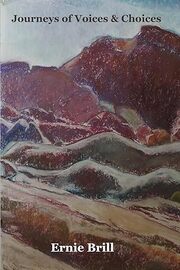
New Poetry book by Ernie Brill: Journeys of Voices and Choices
Leslie Simon says, “Ernie Brill’s rich, memorable poems reflect his encyclopedic and kaleidoscopic mind. From Brooklyn street life to war in Southeast Asia and occupation in the Middle East, his words do not rest. Yes, they become those journeys to another way of seeing every place and time he brings us to, envisioning a way out of here when the going gets kind of rough. Unapologetic work poems, tender love poems, even some carefully crafted sonnets, and a trove of Black Lives Matter hybrid haikus where he will not let us forget those names, those lives, those murders. Requiem and revolution. He’ll convince you of the sacred art of skateboarding. I’d hop on his traveling machine any time. Don’t miss this ride.”
Alison Hubbard, lyricist and author, has a new historical novel just about to be published: The Kelsey Outrage. We'll be reviewing it soon, but for those of you on Long Island, consider meeting her at her book launch party at the Next Chapter in Huntington on Thursday January 25!
Ms. Hubbard's short story "Wildflowers" was published in The Saturday Evening Post in 2022; "Belladonna" won the Slippery Elm Literary Journal Prize for Prose and was published in the 2021 print edition.
Founded in 2016, Review Tales informs, inspires, and provides knowledge of the craft of writing and supports indie authors by providing a platform to demonstrate their well-deserved work. The quarterly magazine is dedicated to readers, writers, self-publishers and includes literature discussions. It is an essential collection of author confessions, exclusive interviews, words of wisdom, book reviews, and literary works. Founder & Editor in Chief: S. Jeyran Main
Marc Kaminsky's latest translations from the Yiddish of the poems of Jacob Glatshteyn are in the current issue of The Manhattan Review (vol.21. No. 1). The issue is available as hard copy or digitally, and can be ordered at Manhattan Review .
The new translations include: "My Wandering Brother," "Sabbath," "The Joy of the Yiddish Word," "Variations on a Theme," "Millions of Dead," "Prayer," and "Yiddishkeit."
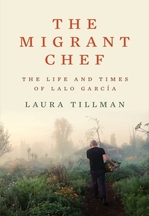
Look for Laura Tillman's new nonfiction book, The Migrant Chef: the Life and Times of Lala Garcia.
Rachel Kin's Bratwurst Haven won a 2023 Colorado Book Award.
Published in Persian!
My novel for children Billie of Fish House Lane. See announcement here. The Iran Book News Agency (IBNA) has just announced that "Juvenile fiction book Billie of Fish House Lane by American author Meredith Sue Willis has been published in Persian and is available to Iranian Children."
BUYING BOOKS MENTIONED IN THIS NEWSLETTER
If a book discussed in this newsletter has no source mentioned, don’t forget that you may be able to borrow it from your public library as either a hard copy or as an e-book. You may also buy or order from your local independent bookstore. To find a bricks-and-mortar store, click the "shop indie" logo left.
A not-for-profit alternative to Amazon.com is Bookshop.org which sends a percentage of every sale to a pool for brick-and-mortar bookstores. You may also direct the donation to a bookstore of your choice. Lots of individuals have storefronts there, too including me.
I have a lot of friends and colleagues who despise Amazon. There is a discussion about some of the issues back in Issue # 184, as well as even older comments from Jonathan Greene and others here.
The largest unionized bookstore in America has a web store at Powells Books. Some people prefer shopping online there to shopping at Amazon.com. An alternative way to reach Powell's site and support the union is via http://www.powellsunion.com. Prices are the same but 10% of your purchase will go to support the union benefit fund.
Another way to buy books online, especially used books, is to use Bookfinder or Alibris. Bookfinder gives the price with shipping and handling, so you can see what you really have to pay. Another source for used and out-of-print books is All Book Stores.
Also consider Paperback Book Swap, a postage-only way to trade books with other readers.
Ingrid Hughes suggests "a great place for used books which sometimes turn out to be never-opened hard cover books is Biblio. She says, "I've bought many books from them, often for $4 including shipping."
If you are using an electronic reader (all kinds), don't forget free books at the Gutenberg Project—mostly classics (copyrights pre-1927), and free, free, free!
Kobobooks.com sells e-books for independent brick-and-mortar bookstores.
More and more public libraries are now offering electronic books for borrowing as well.
RESPONSES TO THIS NEWSLETTER
Please send responses to this newsletter directly to Meredith Sue Willis . Unless you say otherwise, your letter may be edited for length and published in this newsletter.
LICENSE
Books for Readers Newsletter by Meredith Sue Willis is licensed under a Creative Commons Attribution-NoDerivs 3.0 Unported License. Permissions beyond the scope of this license may be available from Meredith Sue Willis. Some individual contributors may have other licenses.
Meredith Sue Willis Home
Meredith Sue Willis, the producer of this occasional newsletter, is a writer and teacher and enthusiastic reader. Her books have been published by Charles Scribner's Sons, HarperCollins, Ohio University Press, Mercury House, West Virginia University Press, Monteymayor Press, Teachers & Writers Press, Mountain State Press, Hamilton Stone Editions, and others. She teaches at New York University's School of Professional Studies.
BACK ISSUES:
#231 Triangle shirtwaist fire, Anthony Burgess, S.A. Cosby, Eva Dolan, Janet Campbell Hale, Barbara Hambly, Marc Harshman, P.D. James, Michael Lewis, Mrs. Oliphant, Paul Rabinowitz, Nora Roberts, Strout, Tokarczuk. Review by Dreama Frisk.
#230 Henry Adams, Tsitsi Dangarembga, Jonathan Lethem, Magda Teter, Mary Jennings Hegar, Chandra Prasad, Timothy Russell, Carter Taylor Seaton, Edna O'Brien, Martha Wells, Thomas Mann, Arnold Bennett, and more. Reviews by Mary Lucille DeBerry, Joe Chuman, John Loonam, Suzanne McConnell, and Edwina Pendarvis.
#229 John Sandford, Dr. J. Nozipo Maraire, Rex Stout; Larry Schardt; Martha Wells; Henry Makepeace Thackery; about Edvard Munch;Erik Larson. Reviews and interviews by John Loonam and Diane Simmons.
#228 Edward P. Jones, Denton Loving, Honorée Fanonne Jeffers. Lee Martin, Jesmyn Ward, Michelle Zauner, Valérie Perrin, Philip K. Dick, Burt Kimmelman. Reviewes by Ernie Brill, Joe Chuman, Eddy Pendarvis, Diane Simmons, & Danny Williams.
#227 Cheryl Denise, Larissa Shmailo, Eddy Pendarvis, Alice McDermott, Kelly Watt, Elmore Leonard, Frances Hodgson Burnett, Suzy McKee Charnas, and more.
#226 Jim Minick, Gore Vidal, Valeria Luiselli, Richard Wright, Kage Baker, Suzy McKee Charnas, Victor Depta, Walter Mosley. David Hollinger reviewed by Joe Chuman, and more.
#225 Demon Copperhead, Thomas Hardy, Miriam Toews, Kate Chopin, Alberto Moravia, Elizabeth Strout, McCullers, Garry Wills, Valerie Nieman, Cora Harrison. Troy Hill on Isaac Babel; Belinda Anderson on books for children; Joe Chuman on Eric Alterman; Molly Gilman on Kage Baker; and lots more.
#224 The 1619 Project, E.M. Forster. Elmore Leonard, Pledging Season by Erika Erickson Malinoski. Emily St. John Mandel, Val Nieman, John O'Hara, Tom Perrotta, Walter Tevis, Sarah Waters, and more.
#223 Amor Towles, Emily St. John Mandel, Raymond Chandler, N.K. Jemisin, Andrew Holleran, Anita Diamant, Rainer Maria Rilke, and more, plus notes and reviews by Joe Chuman, George Lies, Donna Meredith, and Rhonda Browning White.
#222 Octavia Butler, Elizabeth Gaskell, N.K. Jemisin, Joseph Lash, Alice Munro, Barbara Pym, Sally Rooney, and more.
#221 Victor Serge, Greg Sanders, Maggie O'Farrell, Ken Champion, Barbara Hambly, Walter Mosely, Anne Roiphe, Anna Reid, Randall Balmer, Louis Auchincloss. Reviews by Joe Chuman and Chris Connelly
#220 Margaret Atwood, Sister Souljah, Attica Locke, Jill Lepore, Belinda Anderson, Claire Oshetsky, Barbara Pym, and Reviews by Joe Chuman, Ed Davis, and Eli Asbury
#219 Carolina De Robertis, Charles Dickens, Thomas Fleming, Kendra James, Ashley Hope Perez, Terry Pratchett, Martha Wells. Reviews by Joe Chuman and Danny Williams.
#218 Ed Myers, Eyal Press, Barbara Kingsolver, Edwidge Danticat, William Trevor, Tim O'Brien. Reviews by Joe Chuman and Marc Harshman.
#217 Jill Lepore; Kathleen Rooney; Stendhal; Rajia Hassib again; Madeline Miller; Jean Rhys; and more. Reviews and recommendations by Joe Chuman, Ingrid Hughes, Peggy Backman, Phyllis Moore, and Dan Gover.
#216 Rajia Hassib; Joel Pechkam; Robin Hobb; Anne Hutchinson; James Shapiro; reviews by Joe Chuman and Marc Harshman; Fellowship of the Rings#215 Julia Alvarez, Karen Salyer McElmurray, Anne Brontë, James Welch, Veronica Roth, Madeline Martin, Barack Obama, Jason Trask, Katherine Anne Porter & more
#214 Brit Bennet, Oyinkan Braithwaite, Robin Hobb, Willliam Kennedy, John Le Carré, John Loonam on Elana Ferrante, Carole Rosenthal on Philip Roth, Peggy Backman on Russell Shorto, Helen Weinzweig, Marguerite Yourcenar, and more.
#213 Pauletta Hansen reviewed by Bonnie Proudfoot; A conversation about cultural appropriation in fiction; T.C. Boyle; Eric Foner; Attica Locke; Lillian Roth; The Snake Pit; Alice Walker; Lynda Schor; James Baldwin; True Grit--and more.
#212 Reviews of books by Madison Smartt Bell, James Lee Burke, Mary Arnold Ward,Timothey Huguenin, Octavia Butler, Cobb & Seaton, Schama
#211 Reviews of books by Lillian Smith, Henry James, Deborah Clearman, J.K. Jemisin, Donna Meredith, Octavia Butler, Penelope Lively, Walter Mosley. Poems by Hilton Obenzinger.
#210 Lavie Tidhar, Amy Tan, Walter Mosley, Gore Vidal, Julie Otsuka, Rachel Ingalls, Rex Stout, John Updike, and more.
#209 Cassandra Clare, Lissa Evans, Suzan Colón, Damian Dressick, Madeline Ffitch, Dennis Lehane, William Maxwell, and more.
#208 Alexander Chee; Donna Meredith; Rita Quillen; Mrs. Humphy Ward; Roger Zelazny; Dennis LeHane; Eliot Parker; and more.
#207 Caroline Sutton, Colson Whitehead, Elaine Durbach, Marc Kaminsky, Attica Locke, William Makepeace Thackery, Charles Willeford & more.
#206 Timothy Snyder, Bonnie Proudfoot, David Weinberger, Pat Barker, Michelle Obama, Richard Powers, Anthony Powell, and more.
#205 George Eliot, Ernest Gaines, Kathy Manley, Rhonda White; reviews by Jane Kimmelman, Victoria Endres, Deborah Clearman.
#204 Larissa Shmailo, Joan Didion, Judith Moffett, Heidi Julavits, Susan Carol Scott, Trollope, Walter Mosley, Dorothy B. Hughes, and more.
#203 Tana French, Burt Kimmelman, Ann Petry, Mario Puzo, Anna Egan Smucker, Virginia Woolf, Val Nieman, Idra Novey, Roger Wall.
#202 J .G. Ballard, Peter Carey, Arthur Dobrin, Lisa Haliday, Birgit Mazarath, Roger Mitchell, Natalie Sypolt, and others.
#201 Marc Kaminsky, Jessica Wilkerson, Jaqueline Woodson, Eliot Parker, Barbara Kingsolver. Philip Roth, George Eliot and more.
#200 Books by Zola, Andrea Fekete, Thomas McGonigle, Maggie Anderson, Sarah Dunant, J.G. Ballard, Sarah Blizzard Robinson, and more.
#199 Reviews by Ed Davis and Phyllis Moore. Books by Elizabeth Strout, Thomas Mann, Rachel Kushner, Craig Johnson, Richard Powers.
#198 Reviews by Belinda Anderson, Phyllis Moore, Donna Meredith, Eddy Pendarvis, and Dolly Withrow. Eliot, Lisa Ko, John Ehle, Hamid, etc.
#197 Joan Silber, Chimamanda Ngozi Adichie, Alexander Hamilton, Eudora Welty, Middlemarch yet again, Greta Ehrlich, Edwina Pendarvis.
#196 Last Exit to Brooklyn; Joan Didion; George Brosi's reviews; Alberto Moravia; Muriel Rukeyser; Matthew de la Peña; Joyce Carol Oates
#195 Voices for Unity; Ramp Hollow, A Time to Stir, Patti Smith, Nancy Abrams, Conrad, N.K. Jemisin, Walter Mosely & more.
#194 Allan Appel, Jane Lazarre, Caroline Sutton, Belinda Anderson on children's picture books.
#193 Larry Brown, Phillip Roth, Ken Champion, Larissa Shmailo, Gillian Flynn, Jack Wheatcroft, Hilton Obenziner and more.
#192 Young Adult books from Appalachia; Virginia Woolf's To the Lighthouse; Michael Connelly; Middlemarch; historical murders in Appalachia.
#191 Oliver Sacks, N.K. Jemisin, Isabella and Ferdinand and their descendents, Depta, Highsmith, and more.
#190 Clearman, Eyes Glowing at the Edge of the Woods, Doerr, Octavia Butler, Colson Whitehead, Miss Fourth of July, Goodbye and more.
#189 J.D. Vance; Mitch Levenberg; Phillip Lopate; Barchester Towers; Judith Hoover; ; Les Liaisons Dangereuses; short science fiction reviews.
#188 Carmen Ferreiro-Esteban; The Hemingses of Monticello; Marc Harshman; Jews in the Civil War; Ken Champion; Rebecca West; Colum McCann
#187 Randi Ward, Burt Kimmelman, Llewellyn McKernan, Sir Walter Scott, Jonathan Lethem, Bill Luvaas, Phyllis Moore, Sarah Cordingley & more
#186 Diane Simmons, Walter Dean Myers, Johnny Sundstrom, Octavia Butler & more
#185 Monique Raphel High; Elizabeth Jane Howard; Phil Klay; Crystal Wilkinson
#184 More on Amazon; Laura Tillman; Anthony Trollope; Marily Yalom and the women of the French Revolution; Ernest Becker
#183 Hilton Obenzinger, Donna Meredith, Howard Sturgis, Tom Rob Smith, Daniel José Older, Elizabethe Vigée-Lebrun, Veronica Sicoe
#182 Troy E. Hill, Mitchell Jackson, Rita Sims Quillen, Marie Houzelle, Frederick Busch, more Dickens
#181 Valerie Nieman, Yorker Keith, Eliot Parker, Ken Champion, F.R. Leavis, Charles Dickens
#180 Saul Bellow, Edwina Pendarvis, Matthew Neill Null, Judith Moffett, Theodore Dreiser, & more
#179 Larissa Shmailo, Eric Frizius, Jane Austen, Go Set a Watchman and more
#178 Ken Champion, Cat Pleska, William Demby's Beetlecreek, Ron Rash, Elizabeth Gaskell, and more.
#177 Jane Hicks, Daniel Levine, Constance Fenimore Woolson, Ken Chamption, Patricia Harman
#176 Robert Gipe, Justin Torres, Marilynne Robinson, Velma Wallis, Larry McMurty, Charlotte Brontë, Henry James, Fumiko Enchi, Shelley Ettinger
#175 Lists of what to read for the new year; MOUNTAIN MOTHER GOOSE: CHILD LORE OF WEST VIRGINIA; Peggy Backman
#174 Christian Sahner, John Michael Cummings, Denton Loving, Madame Bovary
#173 Stephanie Wellen Levine, S.C. Gwynne, Ed Davis's Psalms of Israel Jones, Quanah Parker, J.G. Farrell, Lubavitcher girls
#172 Pat Conroy, Donna Tartt, Alice Boatwright, Fumiko Enchi, Robin Hobb, Rex Stout
#171 Robert Graves, Marie Manilla, Johnny Sundstrom, Kirk Judd
#170 John Van Kirk, Carter Seaton,Neil Gaiman, Francine Prose, The Murder of Helen Jewett, Thaddeus Rutkowski
#169 Pearl Buck's The Exile and Fighting Angel; Larissa Shmailo; Liz Lewinson; Twelve Years a Slave, and more
#168 Catherine the Great, Alice Munro, Edith Poor, Mitch Levenberg, Vonnegut, Mellville, and more!
#167 Belinda Anderson; Anne Shelby; Sean O'Leary, Dragon tetralogy; Don Delillo's Underworld
#166 Eddy Pendarvis on Pearl S. Buck; Theresa Basile; Miguel A. Ortiz; Lynda Schor; poems by Janet Lewis; Sarah Fielding
#165 Janet Lewis, Melville, Tosltoy, Irwin Shaw!
#164 Ed Davis on Julie Moore's poems; Edith Wharton; Elaine Drennon Little's A Southern Place; Elmore Leonard
#163 Pamela Erens, Michael Harris, Marlen Bodden, Joydeep Roy-Battacharya, Lisa J. Parker, and more
#162 Lincoln, Joseph Kennedy, Etel Adnan, Laura Treacy Bentley, Ron Rash, Sophie's Choice, and more
#161 More Wilkie Collins; Duff Brenna's Murdering the Mom; Nora Olsen's Swans & Klons; Lady Audley's Secret
#160 Carolina De Robertis, The Immortal Life of Henrietta Lacks, Ross King's The Judgment of Paris
#159 Tom Jones. William Luvaas, Marc Harshman, The Good Earth, Lara Santoro, American Psycho
#158 Chinua Achebe's Man of the People; The Red and the Black; McCarthy's C.; Farm City; Victor Depta;Myra Shapiro
#157 Alice Boatwright, Reamy Jansen, Herta Muller, Knut Hamsun, What Maisie Knew; Wanchee Wang, Dolly Withrow.
#156 The Glass Madonna; A Revelation
#155 Buzz Bissinger; reader suggestions; Satchmo at the Waldorf
#154 Hannah Brown, Brad Abruzzi, Thomas Merton
#153 J.Anthony Lukas, Talmage Stanley's The Poco Fields, Devil Anse
#152 Marc Harshman guest editor; John Burroughs; Carol Hoenig
#151 Deborah Clearman, Steve Schrader, Paul Harding, Ken Follet, Saramago-- and more!
#150 Mitch Levenberg, Johnny Sundstrom, and Isabel Wilkerson's The Warmth of Other Suns.
#149 David Weinberger's Too Big to Know; The Shining; The Tiger's Wife.
#148 The Moonstone, Djibouti, Mark Perry on the Grimké family
#147 Jane Lazarre's new novel; Johnny Sundstrom; Emotional Medicine Rx; Walter Dean Myers, etc.
#146 Henry Adams AGAIN! Also,Fun Home: a Tragicomic
#145 Henry Adams, Darnell Arnoult, Jaimy Gordon, Charlotte Brontë
#144 Carter Seaton, NancyKay Shapiro, Lady Murasaki Shikibu
#143 Little America; Guns,Germs, and Steel; The Trial
#142 Blog Fiction, Leah by Seymour Epstein, Wolf Hall, etc.
#141 Dreama Frisk on Hilary Spurling's Pearl Buck in China; Anita Desai; Cormac McCarthy
#140 Valerie Nieman's Blood Clay, Dolly Withrow
#139 My Kindle, The Prime Minister, Blood Meridian
#138 Special on Publicity by Carter Seaton
#137 Michael Harris's The Chieu Hoi Saloon; Game of Thrones; James Alexander Thom's Follow the River
#136 James Boyle's The Creative Commons; Paola Corso, Joanne Greenberg, Monique Raphel High, Amos Oz
#135 Reviews by Carole Rosenthal, Jeffrey Sokolow, and Wanchee Wang.
#134 Daniel Deronda, books with material on black and white relations in West Virginia
#133 Susan Carpenter, Irene Nemirovsky, Jonathan Safran Foer, Kanafani, Joe Sacco
#132 Karen Armstrong's A History of God; JCO's The Falls; The Eustace Diamonds again.
#131 The Help; J. McHenry Jones, Reamy Jansen, Jamie O'Neill, Michael Chabon.
#130 Lynda Schor, Ed Myers, Charles Bukowski, Terry Bisson, The Changing Face of Anti-Semitism
#129 Baltasar and Blimunda; Underground Railroad; Navasky's Naming Names, small press and indie books.
#128 Jeffrey Sokolow on Histories and memoirs of the Civil Rights Movement
#127 Olive Kitteridge; Urban fiction; Shelley Ettinger on Joyce Carol Oates
#126 Jack Hussey's Ghosts of Walden, The Leopard , Roger's Version, The Reluctanct Fundamentalist
#125 Lee Maynard's The Pale Light of Sunset; Books on John Brown suggested by Jeffrey Sokolow
#124 Cloudsplitter, Founding Brothers, Obenzinger on Bradley's Harlem Vs. Columbia University
#123 MSW's summer reading round-up; Olive Schreiner; more The Book Thief; more on the state of editing
#122 Left-wing cowboy poetry; Jewish partisans during WW2; responses to "Hire a Book Doctor?"
#121 Jane Lazarre's latest; Irving Howe's Leon Trotsky; Gringolandia; "Hire a Book Doctor?"
#120 Dreama Frisk on The Book Thief; Mark Rudd; Thulani Davis's summer reading list
#119 Two Histories of the Jews; small press books for Summer
#118 Kasuo Ichiguro, Jeanette Winterson, The Carter Family!
#117 Cat Pleska on Ann Pancake; Phyllis Moore on Jayne Anne Phillips; and Dolly Withrow on publicity
#116 Ann Pancake, American Psycho, Marc Harshman on George Mackay Brown
#115 Adam Bede, Nietzsche, Johnny Sundstrom
#114 Judith Moffett, high fantasy, Jared Diamond, Lily Tuck
#113 Espionage--nonfiction and fiction: Orson Scott Card and homophobia
#112 Marc Kaminsky, Nel Noddings, Orson Scott Card, Ed Myers
#111 James Michener, Mary Lee Settle, Ardian Gill, BIll Higginson, Jeremy Osner, Carol Brodtick
#110 Nahid Rachlin, Marion Cuba on self-publishing; Thulani Davis, The Road, memoirs
#109 Books about the late nineteen-sixties: Busy Dying; Flying Close to the Sun; Looking Good; Trespassers
#108 The Animal Within; The Ground Under My Feet; King of Swords
#107 The Absentee; Gorky Park; Little Scarlet; Howl; Health Proxy
#106 Castle Rackrent; Harry Potter and the Deathly Hallows; More on Drown; Blindness & more
#105 Everything is Miscellaneous, The Untouchable, Kettle Bottom by Diane Gilliam Fisher
#104 Responses to Shelley on Junot Diaz and more; More best books of 2007
#103 Guest Editor: Shelley Ettinger and her best books of 2007
#102 Saramago's BLINDNESS; more on NEVER LET ME GO; George Lies on Joe Gatski
#101 My Brilliant Career, The Scarlet Letter, John Banville, Never Let Me Go
#100 The Poisonwood Bible, Pamela Erens, More Harry P.
#99 Jonathan Greene on Amazon.com; Molly Gilman on Dogs of Babel
#98 Guest editor Pat Arnow; more on the Amazon.com debate
#97 Using Thomas Hardy; Why I Write; more
#96 Lucy Calkins, issue fiction for young adults
#95 Collapse, Harry Potter, Steve Geng
#94 Alice Robinson-Gilman, Maynard on Momaday
#93 Kristin Lavransdatter, House Made of Dawn, Leaving Atlanta
#92 Death of Ivan Ilych; Memoirs
#91 Richard Powers discussion
#90 William Zinsser, Memoir, Shakespeare
#89 William Styron, Ellen Willis, Dune, Germinal, and much more
#88 Sandra Cisneros's Caramelo
#87 Wings of the Dove, Forever After (9/11 Teachers)
#86 Leora Skolkin-Smith, American Pastoral, and more
#85 Wobblies, Winterson, West Virginia Encyclopedia
#84 Karen Armstrong, Geraldine Brooks, Peter Taylor
#83 3-Cornered World, Da Vinci Code
#82 The Eustace Diamonds, Strapless, Empire Falls
#81 Philip Roth's The Plot Against America , Paola Corso
#80 Joanne Greenberg, Ed Davis, more Murdoch; Special Discussion on Memoir--Frey and J.T. Leroy
#79 Adam Sexton, Iris Murdoch, Hemingway
#78 The Hills at Home; Tess of the D'Urbervilles; Jean Stafford
#77 On children's books--guest editor Carol Brodtrick
#76 Mary Lee Settle, Mary McCarthy
#75 The Makioka Sisters
#74 In Our Hearts We Were Giants
#73 Joyce Dyer
#72 Bill Robinson WWII story
#71 Eva Kollisch on G.W. Sebald
#70 On Reading
#69 Nella Larsen, Romola
#68 P.D. James
#67 The Medici
#66 Curious Incident,Temple Grandin
#65 Ingrid Hughes on Memoir
#64 Boyle, Worlds of Fiction
#63 The Namesame
#62 Honorary Consul; The Idiot
#61 Lauren's Line
#60 Prince of Providence
#59 The Mutual Friend, Red Water
#58 AkÉ, Season of Delight
#57 Screaming with Cannibals
#56 Benita Eisler's Byron
#55 Addie, Hottentot Venus, Ake
#54 Scott Oglesby, Jane Rule
#53 Nafisi,Chesnutt, LeGuin
#52 Keith Maillard, Lee Maynard
#51 Gregory Michie, Carter Seaton
#50 Atonement, Victoria Woodhull biography
#49 Caucasia
#48 Richard Price, Phillip Pullman
#47 Mid- East Islamic World Reader
#46 Invitation to a Beheading
#45 The Princess of Cleves
#44 Shelley Ettinger: A Few Not-so-Great Books
#43 Woolf, The Terrorist Next Door
#42 John Sanford
#41 Isabelle Allende
#40 Ed Myers on John Williams
#39 Faulkner
#38 Steven Bloom No New Jokes
#37 James Webb's Fields of Fire
#36 Middlemarch
#35 Conrad, Furbee, Silas House
#34 Emshwiller
#33 Pullman, Daughter of the Elm
#32 More Lesbian lit; Nostromo
#31 Lesbian fiction
#30 Carol Shields, Colson Whitehead
#29 More William Styron
#28 William Styron
#27 Daniel Gioseffi
#26 Phyllis Moore
#25 On Libraries....
#24 Tales of the City
#23 Nonfiction, poetry, and fiction
#22 More on Why This Newsletter
#21 Salinger, Sarah Waters, Next of Kin
#20 Jane Lazarre
#19 Artemisia Gentileschi
#18 Ozick, Coetzee, Joanna Torrey
#17 Arthur Kinoy
#16 Mrs. Gaskell and lots of other suggestions
#15 George Dennison, Pat Barker, George Eliot
#14 Small Presses
#13 Gap Creek, Crum
#12 Reading after 9-11
#11 Political Novels
#10 Summer Reading ideas
#9 Shelley Ettinger picks
#8 Harriette Arnow's Hunter's Horn
#7 About this newsletter
#6 Maria Edgeworth
#5 Tales of Good and Evil; Moon Tiger
#4 Homer Hickam and The Chosen
#3 J.T. LeRoy and Tale of Genji
#2 Chick Lit
#1 About this newsletter