|
NEWSLETTER - May 2026
Welcome to the new LIFE Worldwide quarterly newsletter. We aim to bring you the latest developments in the world of Medical Mycology, including breaking news, diagnostic innovations and literature reviews. |
|
Is the use of azole antifungal prophylaxis in AML patients treated with venetoclax necessary?
|
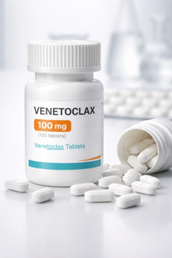
A retrospective study by Ambinder and colleagues showed azole antifungal prophylaxis (AFP) added no improvement in the overall survival of newly diagnosed acute myeloid leukaemia patients receiving venetoclax and a hypomethylating (Ven/HMA) agent. Patients who received azole antifungal prophylaxis had an inferior overall survival, with 34% of patients receiving AFP having died by day 120 compared to 25% of those not receiving AFP. Find more here. |
Rapid CRISPR-based assay in smear- and culture-negative fungal keratitis
|
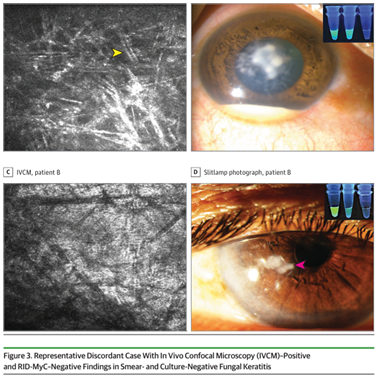
The underestimation of the burden of fungal keratitis worldwide posed by negative fungal cultures and microscopy may soon be nibbed. RID-MyC, a new rapid molecular tool for diagnosing fungal keratitis developed by Aravind Eye Hospital in India, demonstrated a sensitivity of 82.1% and specificity of 76.9% compared with the in vivo confocal microscopy (IVCM) standard, in smear and culture-negative cases. Concordance between RID-MyC and IVC was observed in 80.5% of the cases and takes <10 minutes to do. Find more here. |
Sirius One system outperformed Microflex 3.1 in the identification
of filamentous fungi
|
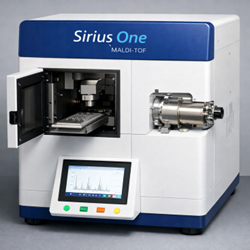
A Swedish study comparing MALDI-TOF systems reported the Sirius One system showed higher sensitivity than the Microflex 3.1 in the detection of moulds; achieving a 92.6% correct identification rate for moulds with the Mass Spectrometry Identification (MSI)-2 database, compared with 70.6% for Microflex (p <0.01). In addition, the MSI system was seen to outperform the Bruker’s manufacturer library in identification to species level. Find more here. |
Empirical antifungals demonstrate superiority to pre-emptive therapy in patients with liver failure |
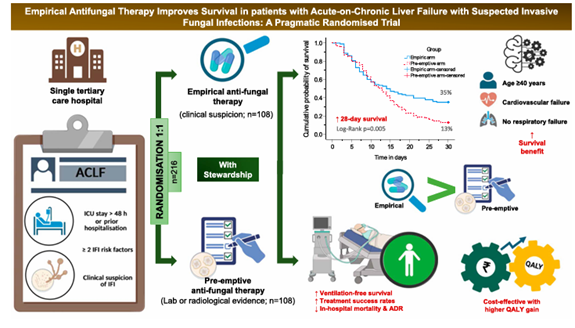
A randomised controlled trial conducted in India affirmed early empirical antifungal therapy improves survival in patients with acute-on-chronic liver failure and invasive fungal infections (IFIs), compared with pre-emptive therapy (based on positive diagnostic markers). The significant findings were a higher treatment success and resolution of IFIs, and a lower in-hospital and IFI-attributable mortality in the empirical group (55.6% vs 75.9%; P = 0.003). In addition, fewer adverse events and an increased cost-effectiveness were observed. Find more here. |
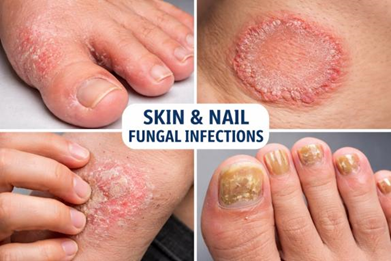
DermatoPlex qPCR assay demonstrates superiority over conventional methods in the detection of dermatophyte fungi and Candida species. |
In a Spanish study conducted at the Navarra University Hospital, DermatoPlex qPCR for detecting dermatomycoses had sensitivities 2.3x and 1.7x greater than direct microscopic examination and culture, respectively. The overall agreement for the molecular detection of dermatophyte fungi and Candida spp. in skin and nail material, compared with culture, was 75.4%, while the positive rate of direct microscopic examination among qPCR-positive results was 38.6%. Find more here.
|
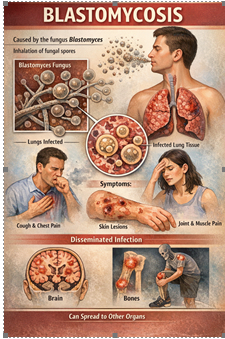
Averting missed diagnosis of blastomycosis in an endemic region; understanding the rudiments |
A retrospective analysis from a US study by Desmond Barber and colleagues reported pre-existing pulmonary conditions, diabetes mellitus and respiratory therapies as risk factors for delayed diagnosis of blastomycosis. The average diagnostic delay of blastomycosis was 27 days, with 17% of patients experiencing delays of over a month. Most cases seen had ‘community-acquired pneumonia’ with 60% of the missed opportunities occurred primarily in outpatient settings. Find more here. |
Fatal outcomes in a yellow fever series linked with fungal pneumonia
|
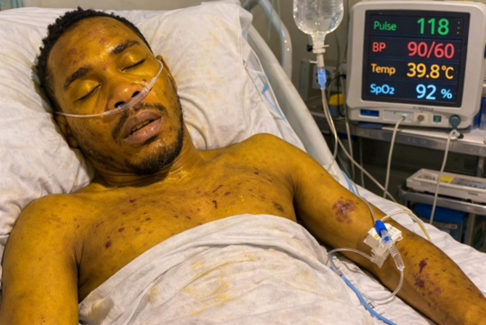
A Brazilian autopsy-based case series (2017 to 2019) of yellow fever patients reported pneumonia or haemorrhage in the respiratory tract as the immediate cause of death in 31 (42.4%) cases. Microscopy detected yeasts and hyphae in 27 (37%) and 9 (12%) cases, morphologically similar to Candida species, and Aspergillus species, respectively. Further analysis using Sanger sequencing of tissue samples from 48 cases identified Candida species in 10 (47.6%) cases, Aspergillus in 4 (19%), and Trichosporon in 2 (9.5%). Find more here.
|
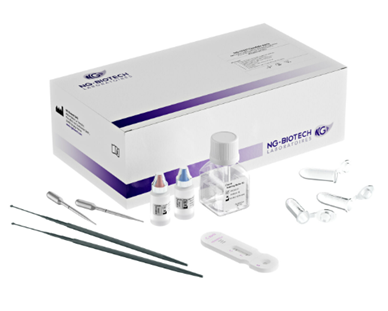
NG-TEST® Candida auris: The 1st lateral flow immunoassay for detecting Candida auris is now commercially available and being marketed by NG.BIOTECH Laboratories. It Enables fast identification of Candida auris in only 15 minutes, from yeast colonies grown on agar plate or turbid enrichment broth. Find more here. |
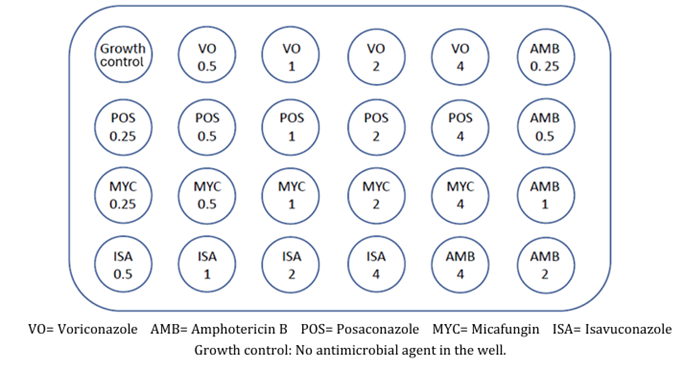
AD Antifungal: A panel containing five
different antifungals incorporated into an agar medium (RPMI Agar) in
different concentrations. The device is used for evaluation of antifungal
susceptibility test of yeasts and molds. All wells are inoculated with a
standardized microbial suspension. After incubation, the MIC result is
read and interpreted. It is marketed by LIOFILCHEM®. Find more here. |
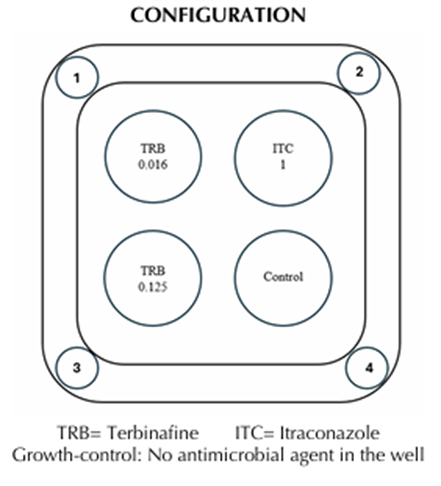
Derma-SR-screen: A 4-well panel containing
two antifungals incorporated into an agar medium in different
concentrations. Terbinafine is present in two different concentrations
0.016 mg/L and 0.125 mg/L, whereas Itraconazole is present in a
concentration of 1 mg/L. Derma-SR-screen is also marketed by LIOFILCHEM®.
Find more here. |
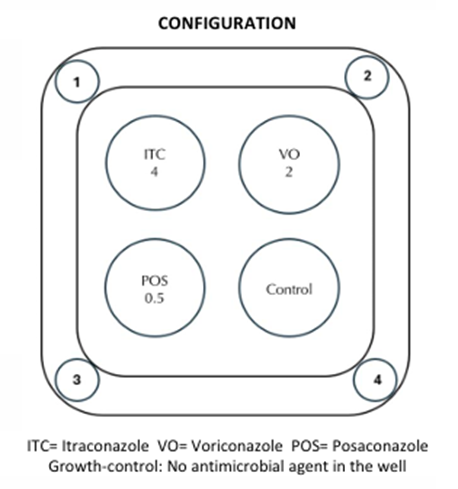
Fumi-SR-screen: Fumi-SR-screen is a 4-well panel containing
three antifungals incorporated into an agar medium in different
concentrations. Itraconazole is present in a concentration of 4 mg/L;
Voriconazole is present in a concentration of 2 mg/L; Posaconazole is
present in a concentration of 0.5 mg/L. It is marketed by LIOFILCHEM®. Find more here. |
RECENT GUIDELINES added to LIFE
|
- Cortés JA, Rodríguez-Lugo DA, Valderrama-Rios MC, Rabagliati
R, Capone D, Álvarez-Moreno CA, et al. Evidence-based clinical
standard for the diagnosis and treatment of invasive lung aspergillosis in
the patient with oncohematologic disease. Braz J Infect Dis.
2025;29(2):104517.
- Xiao M, Zhang L, Wang H, Fan X, Zhou M, Lin J, et al. The
2025 guidance on the surveillance and control of Candida infections:
Recommendations from the China invasive fungal surveillance net (CHIF-NET)
study group. J Microbiol Immunol Infect. 2026:S1684-1182(26)00036-8.
|
|
LIFE Worldwide is a no-cost resource provided by the Fungal Infection Trust (UK), providing trusted up-to-date information on human fungal disease. Please pass this newsletter on to others who might be interested and encourage them to sign up for the next edition here: signup.ymlp.com/xgjyeqqegmguu |
|
|
|