 Est. 2008; bringing nature & gardeners together Jan 2, 2026
|
|
NURSERY NOTES: Happy new year! In the spirit of new years resolutions, why not skip the gym on Jan 6, and instead practice "TreeRobics" at TreeFolks nursery? Tree-Athletes will unload and label 1,200 five gallon trees. (There is a less strenuous workday at the tree nursery the following day.) TreeFolks 🌿

Condolences to the family and friends of nurserywoman Melissa Sledd, who passed away on Dec. 18 at age 70. Her family's Sledd Nursery at 1211 West Lynn in Clarksville has been in business for 48 years. Statesman Obituary ❦
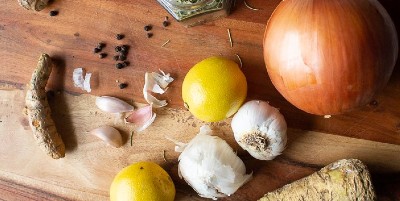
MAKE YOUR OWN FIRE CIDER: to boost immune systems through the winter season of coughs, colds and flu, consider making a batch of this potent concoction, with its mix of ginger, garlic, onion, horseradish, thyme, cayenne pepper and apple cider. Wooden Spoon Herbs ❦
_______________________________________________
WATER-CONSERVATION TIPS: plant low-water natives, harvest AC condensation, create a backbone to your garden with trees, and harvest rainwater with swales. These are some of the tips offered by local designer Christine Ten Eyck. Gardenista ❦

WARMING HERBS FOR THE WINTER: Cenizo, chile pequin, rosemary, thyme and oregano can all help us be healthy though the winter months. Herbalist Corey Gusnowski (EZ Herbs) shares her knowledge on Central Texas Gardener. CTG ❦
THE AUSTIN GARDEN relies on readers for support. Whether annual or monthly, all donations are welcome. At present 7 % of readers fund this newsletter. Many thanks in advance. PayPal link ❦
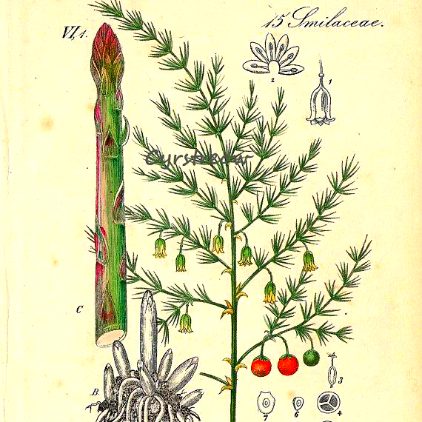 A is for Asparagus
by Chris Winslow
ONE VERY IMPORTANT vegetable to consider for your garden in 2026 is asparagus, and now is a good time to prepare beds and to think about getting a crop in the ground.
Asparagus has a delicious flavor when served with melted butter, is very good for your health, and will be productive for 15 years or more.
Garden asparagus, named from the Greek word asparagos which means sprout or shoot, has been cultivated since ancient times. The world’s oldest surviving recipe book (from the third century) even refers to it.
This culinary vegetable is a genus in the lily family. It grows a lateral primary root and then sends its shoots above ground when the weather warms up in the spring.
Establishing an asparagus row in your garden is fairly easy. Since it takes 2 to 3 years to mature from seed to edible size, you can save a lot of time by planting ‘crowns’ that are already 2 years old.
(Two varieties to look for are U.C.72 and U.C.157 Both will produce early, and are prolific. Barton Springs Nursery has some 4" pots of U.C. 157, for $3 each. Also check on-line at
Locate your plants in a well-drained, sunny spot. Since they are perennials, usually a sunny location along a fence line or along an edge of the garden is best. This way they can be left alone when you dig up your vegetable patch between seasons.
The asparagus row itself should be tilled or plowed to a depth of 12 inches. You should blend adequate organic matter, such as compost and fertilizer, with the garden soil. Fortunately, asparagus thrives in our alkaline soil.
Make a deep trench one foot deep down the middle of the row and plant the asparagus crowns at 12 to 18 inch intervals, spreading the side roots out along the trench.
Cover the crowns with 2 to 3 inches of soil. Firm around the roots and water in. As the first season progresses, add soil to the trench until it is full by fall.
With the asparagus crowns as deep as 12 inches, the surface of the can be cultivated and lightly tilled to control weeds without hurting the crowns.
The shoots grow to a height of 2 to 4 feet. They then open into feathery foliage which has small greenish-white flowers. The spears are harvested in the spring at a height of 4 to 6 inches. As harvesting continues, the spears will become more thin and wispy.
When they become smaller than the diameter of a pencil, harvesting should stop. This will enable the shoots to grow into feathery branches that will supply renewed energy to the roots.
In the fall, after the first frost has browned the foliage, the stems should be cut back to ground level. You should then heap generous amounts of organic fertilizer upon the asparagus row or bed. The rains of winter will carry the fertilizer to the roots which will grow and produce edible sized “spears” in the spring.
Rule of thumb: a 100 foot row will adequately feed a family of 5. After harvest, asparagus is usually boiled or steamed until tender. Traditionally the spears are served with a sauce like hollandaise, or served with melted butter and drizzled with parmesan cheese.
This vegetable is rich in folic acid. This helps make the blood healthy and strengthens the liver. It is low in sodium and calories, has no fat or cholesterol, and is a great source of potassium and fiber.
The only disease associated with asparagus plants is rust. By planting disease resistant varieties, this should not be a problem. ❦
 |
|
IT'S ABOUT THYME LEGACY PUBLICATIONS.
CONTACT EDITOR DARREL MAYERS |
|
|