Meredith Sue Willis's
Books for Readers # 236
October 14, 2024
Back Issues MSW Home About Meredith Sue Willis Contact
READ THIS NEWSLETTER IN ITS PERMANENT ONLINE LOCATION!! PRETTIER!! LINKS ARE MORE STABLE! PLEASE PLEASE PLEASE Read IT AT permanent location
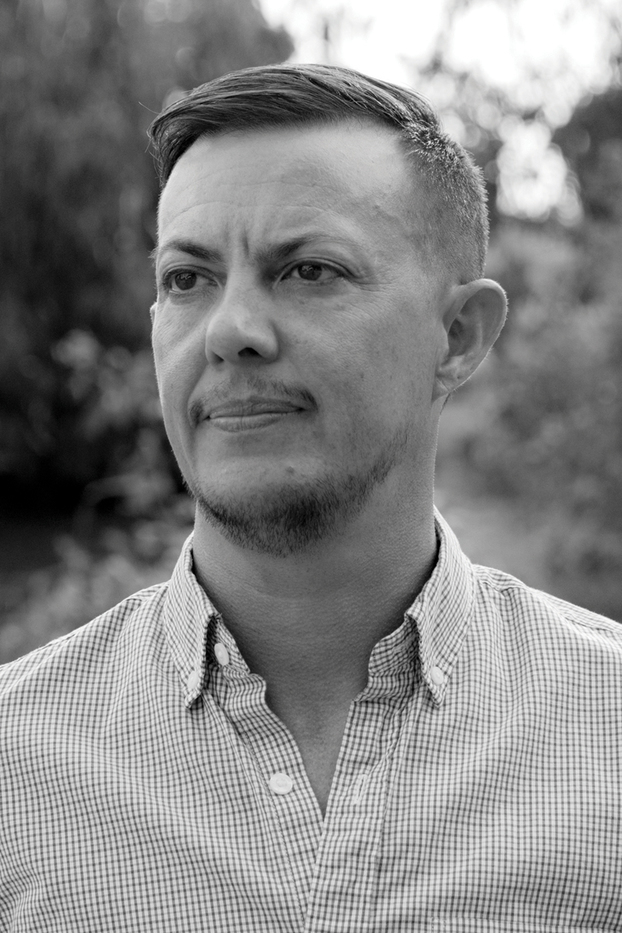
Some of the writers featured this issue: Brandon Taylor; Carter Sickels,
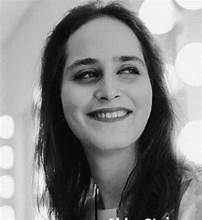
Abby Chava Stein; Jane Austen, Robin Hobb, and Stephen King
October issue of Adventures in the Written Word
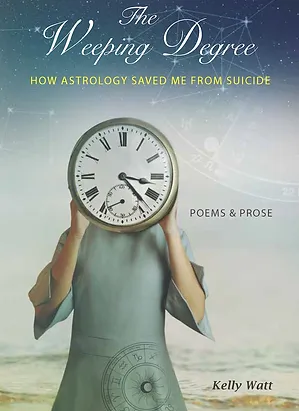
Check out Kelly Watt's newsletter-- and her new book of poems,
just out, Weeping Degree .Cynthia Swanson on going from best-selling commercial author to self-publishing.
Do you have a library card for a public library in West Virginia? You can borrow many of MSW's books--and books by many other people-- for Kindle and other ebook readers.
Go to this Overdrive site.Some of my favorite books of 2024 at Shepherd.com -- a site
that offers reading ideas and the opportunity to share yours.FREE: Danny Williams is offering free samples of his editing services. See more here.
CONTENTS
Back Issues
Announcements
Book Reviews
Short Takes
Especially for Writers
BOOK REVIEWS
This list is alphabetical by book author (not reviewer).
They are written by MSW unless otherwise noted.Mansfield Park by Jane Austen
The Sense of an Ending by Julian Barnes
Flaubert's Parrot by Julian Barnes
Cape May by Chip Cheek reviewed by Elaine Durbach
Gods of Guilt by Michael Connelley
A Map of the World by Jane Hamilton reviewed by Danny Williams
Writers and Lovers by Lily King reviewed by Elaine Durbach
A Time to Kill by John Grisham
Ava Gardner and the Shawshank Redemption by Stephen King
Suicide of the West by Jonah Goldberg reviewed by Joel Weinberger
Holy Days: World of a Hasidic Family by Lis Harris
Will There Also Be Singing?—Poems by Pauletta Hansel reviewed by Edwina Pendarvis
Whereabouts by Jhumpa Lahiri reviewed by Diane Simmons
Tablets Shattered: The End of An American Jewish Century and the
Future of American Jewish Life by Joshua Leifer Reviewed by Joe ChumanAkmaral by Judith Lindbergh reviewed by Diane Simmons
Wizard of the Pigeons by Megan Lindholm (Robin Hobb)
Hidden Girls: A Birth Mother’s Story of Reunion and Reckoning
by Julia MacDonnell reviewed by Diane SimmonsLonesome Dove by Larry McMurtry reviewed by Diane Simmons
Black Sun and Fevered Star By Rebecca Roanhorse
The Evening Hour by Carter Sickels
Becoming Eve by Abby Chava Stein
The Bone Shard Daughter by Andrea Stewart
An Ember in the Ashes; A Torch against the Night, A Reaper at the Gates,
A Sky Beyond the Storm by Sabaa TahirReal Life by Brandon Taylor
1876 by Gore Vidal
Lincoln by Gore Vidal reviewed by Diane Simmons
I'm excited to say that several people have responded to my request for sharing short reviews: see the reviews below and listed above as well. You're invited to send yours. Contributor/recommenders this month include Diane Simmons, Elaine Durbach, Joel Weinberger, Danny Williams, and Nikolas Kozloff. Eddy Pendarvis contributed a full length review of Pauletta Hansel's poems Will There Also Be Singing? There's also a Joe Chuman review of Joshua Leifer's book on the future of American Jewish life.
The reviews that don't say "reviewed by" are my me. I have some new fantasy writers to recommend along with several books new and old like Carter Sickels' excellent The Evening Hour and Real Life by Brandon Taylor. I also enjoyed more short novels from Kenneth C. Davis's book Great Short Books: A Year of Reading--Briefly.
Invited by Shepherd.com to contribute my favorite 2024 books, I chose rapidly, because I had a lot more "favorites" than three. Shepherd.com welcomes your reviews too.
BOOK REVIEWS
The Evening Hour by Carter Sickels
This beautiful book was suggested to me by Eddy Pendarvis. It covers a lot of what Kingsolver does in Demon Copperhead but in a less spectacular but equally powerful way. It focuses on one guy, one tiny town, one family, and one toxic water dam break because of mountaintop removal.
Cole, the very close third person protagonist, loves working with older people, loves his community, and is pretty much apolitical. He was raised by his grandmother and a thundering snake-handling preacher grandfather, His mind is full of pyrotechnic Biblical quotations, even though he doesn't really believe them in any literal way. He works in a nursing home and wishes vaguely to be a nurse instead of an aide, but takes no action. And oh, yes, he steals prescription medications and other items and sells them to people around the county. He is a lovely, loving damaged young man.
The way Sickels handles this is amazing, and also the way he handles the coal company destroying the land. It's another good entry for someone who wants to get some understanding of the bad stuff in West Virginia and the rest of Appalachia, but without stereotypes.
Holy Days: World of a Hasidic Family by Lis Harris.
This came out back in 1985. I remember reviews of it, and wanting to read it, but I was just starting out with having a baby in my life and not reaching out very far in my reading. Its chapters alternate Harris's experiences with a pseudonymous Lubavitcher family in Crown Heights, Brooklyn and some Hasidic history. She organizes the book by holidays and other events that structure the life of the Konigsberg family.
I was fascinated. Harris, who chaired the nonfiction department at the Writing Division of the Columbia School of the Arts, hasn't written all that many books, but she works thoroughly and painstakingly. At the time she did the research for this book, she had young sons and a husband in Manhattan and would take the the train over to Eastern Parkway in Brooklyn to the Konigsbergs and the famous "770" building that is the center of the Lubavitcher movement. She finds herself attracted by the rich group life and is inspired by many of the rituals. She is especially moved by the experience of the mikvah, the ritual cleansing bath.
Above all, though, she learns from the family that welcomes her. Moshe Konigsberg, the father, wanted to be a teacher but was told almost casually by the Lubavitchers' revered Rebbe that he should be an engraver instead, so he did. His second wife is Sheina, a Midwesterner who turned to Hasidism after being widowed herself. She is an excellent interpreter of Hasidic life for a secular Jew like Harris (and thus for readers). One sees the attraction of the women's very communal lives, and while Harris gives a brief chapter about a couple of people who left the Lubavitchers, her main take is affectionate, with some of the envy I myself always feel for anyone in a closed system: the Hasidim, the Amish (there's a funny story in Holy Days about a secular Jew who is fine with the Amish,except for their black hats).
All the rigmarole about sex and separation and women's responsibility for the huge families is off-putting to me, but it is clear that so many thrive on being part of something very large, and in their belief, very important.
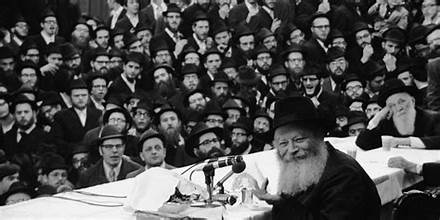
It's really an excellent book, and I'm left with my sadness about how these interesting people aren't interested in me, or much of the rest of the world. The Rebbe, Menachem Mendel Schneerson, died thirty years ago, but some of the Lubavitchers still think he might be the Messiah. Since his death, Chabad houses for teaching and converting other Jews have spread around the world.
Here's the original New York Times review of Holy Days: https://www.nytimes.com/1985/11/10/books/for-torah-community-and-rebbe.html.
The Rebbe and followers
Becoming Eve by Abby Chava Stein
More Jewish orthodoxy. This one is short, fast, upbeat memoir about gender dysphoria in a Hasidic ultra orthodox context. It is the memoir of Abby Chava Stein from her birth.
She was raised as an oldest son in a family descended from the founder of Hasidism, a sort of rabbinical prince who always felt like a girl. She was brilliant, rebellious, finally married and fathered a son--and then broke all the rules to search the Internet and discover she wasn't the only girl in a boy's body.
She leaves home, masters English (she grew up speaking Yiddish), goes to college, and finds organizations and people who help her. She begins gender therapy, comes out to her family and is shunned by them. The story is fast moving and rich--Stein is only in her early thirties--but she, and the details of Hasidic life are fascinating. Abby Chava Stein herself is so positive, even with her memories of suffering, that you are swept along happily.
Mansfield Park by Jane Austen
Once more, with different feelings. I last read it in 2015, and in my notes then, I wrote a little abo
ut how I rooted for the Crawfords, and to some extent I still do, but in this 2024 reading I can see much more clearly that while they are, as Fanny and Edmund say, morally spoiled by a bad upbringing. It is also clearer to me that Edmund is a prig and a patriarch-in-training, and Fanny herself is severely limited by her early years in a home that was disorganized and also short on moral instruction.
I always remember her visit back to Portsmouth as happening much earlier in the novel, but it is in the final quarter. Fanny, as a child, was swept from that shabby, crowded place to great Mansfield Park. Terrified if not terrorized, she slowly makes a tiny corner for herself, mostly by serving her languorous Aunt Bertram.
Cousin Edmund instructs her in everything moral, and she learns it rigidly, and also, of course, falls in love with him. Her strong moral center is a surprise later in the novel when she refuses to marry Henry Crawford, who genuinely loves her, we are to believe, and probably could have won her had he not decided to dabble in one last flirtation. I would have liked to read that novel, the nonexistent one where Fanny, in spite of her secret passion for Edmund, takes on Henry Crawford. But the ever clear-eyed Austen sees it as far more likely that Henry can be patient only so long. His flirtation turns into an affair that is disastrous for all parties, especially the proud Bertrams.
In fact, for all of Fanny's limitations, she is the only person in the novel who steadily improves in strength and social position. The Bertrams are devastated by oldest daughter Maria's sins, and even Edmund acts against his own beliefs over the in-house theatricals. Everyone is chastened. Austen's chapter long summary at the end in the voice of her implied author is impressively successful: she gives us the "whatever-happened-to's," but it is done so neatly, and so fulfills our desire to know, that it is an essential structural part of the novel.
I think it is no longer my favorite Austen novel–I just can't love Fanny and Edmund- although I find it broader and stronger and more intelligent than ever. Also its analysis of women's roles is brilliant, broad and deep, whether or not Austen herself ever imagined a word other than the one she knew. I think my favorite of hers these days is Persuasion.
One thing Austen never does is romanticize poverty-- or the wealthy, for that matter.
My sister just read the book in an edition called The Annotated Mansfield Park by David M. Shapard. My sister says she likes the annotations and background material better than the story.
A few more comments: https://www.telegraph.co.uk/culture/books/10987048/Mansfield-Park-shows-the-dark-side-of-Jane-Austen.html
My 2015 notes: https://www.meredithsuewillis.com/bfrarchive176-180.html#austenagain
Will There Also Be Singing?—Poems by Pauletta Hansel Reviewed by Edwina Pendarvis
Just about everybody I know is mad or scared (or both) because of the political and economic times we’re going through. Vehement disagreement on what’s wrong and what the solutions are makes things even worse. Pauletta Hansel’s Will There Also Be Singing? offers wonderfully bold and intriguing combinations of her own and others’ observations of and feelings about hard times—some past, most present. The book’s three sections include voices from the coal fields; a “conversation” between Hansel herself and Black sociologist, James Hathaway Robinson (born in Kentucky, 1887; died. in Ohio, 1963); and voices of others poets, creating a virtual community. That community includes, through the book’s title and epigram, the great playwright and poet, Bertolt Brecht, who faced the hard times of post-World War I Germany, with its hyperinflation and the growth of the Nazi party that eventually brought Hitler to power.
The first section opens with “You Could Draw a Circle Around Where I Live,” a poem that begins with the words of UMW President, Cecil Roberts, and moves to those of a coal miner, who bids us to listen: “while I have air enough to speak / what you don’t want to hear.” This poem and others, such as “Aerial View of Catastrophic Flooding in Eastern Kentucky,” make clear that not only miners suffer damage, but whole communities and the places they call home, Among the poems about the importance of place is “A Word like Home: A Cento.” Composed of lines by other poets, it builds a haunting narrative of what home can mean. Notes at the end of the book tell who the other poets are in this and other cento poems in the collection.
The second section contains one poem, “James Hathaway Robinson: A conversation in prose and poetry, 1919-2022.” It opens with an excerpt from the Notable Kentucky African American Data Base, briefly describing Robinson, who moved from Kentucky to Cincinnati, Ohio, to teach and who wrote, among other things, The Negro in Cincinnati, published in 1919. A second excerpt, from the Urban Appalachian Community Coalition Website, says Cincinnati neighborhoods that Appalachians moved into didn’t always welcome them, but saw them as examples of the “Southern Appalachian migrant problem.” The body of the poem alternates observations made by Robinson with lines of poetry by Hansel, his observations referring to Blacks in Cincinnati, hers reflecting her misunderstanding of relations between the races, as the following lines from the poem show:
My people, his people
“The Negro lives by himself, works by himself”
suffers sick “by himself in the colored ward... \
Unlike me, Robinson had no illusions
“[And] when he dies, ‘he is buried by himself whether
in a colored cemetery or the colored section of the
Potter’s Field.”
That our people were one and the same.
“The presumption is invariable against the Negro and
he is often arrested and sentenced where others . . .
I am the other.
would be excused. [And the press gives] undue
publicity to [black] weaknesses, foibles, and crimes
while seldom mentioning black accomplishments
and virtues . . .
We want to believe things are different now.
The final section begins with “Presidents Day 2021” and the lines, “Friend, I can’t stop thinking about race, today / and by race, I mean whiteness.” The poet acknowledges white privilege and the presence of racial bias even among those with the best intentions, including in her. The poem ends with these lines:
I wear my whiteness lightly,
like a down-filled coat. I hardly know
it’s there, unless I’m called out to the cold
without it. And, friend, how often am I
called to that?
In “On Grief: November 2016,” the poet is listening to a speaker talking about the six stages of grief. As the poem progress, we learn that the poet is grieving because of “this unnatural/disaster of a president-elect” (Trump admirers will probably have stopped reading earlier in this collection). Despite the desirability of reaching meaning through completing the stages, she concludes, “. . . I’m going to / stick with anger, / stage two.” Her conclusion jibes with the poem, “I Confess,” in which, the poet says that despite their storied history, she doesn’t believe in assassination of evil rulers, “regardless of whether the target / will ever see the inside of a detention center, / and be faced with deciding, like thousands / of seven-year-olds, should the assigned Mylar blanket / go over or under on the mud-caked concrete floor” (a comment on the Trump administration’s immigration policies).
One of my favorite poems in the whole collection is “America.” It reminds me of Allen Ginsberg’s funny, sad, and powerful poem of the same title. Lamenting ills of the mid-1950s, he concludes with his intention to help: “I’d better get right down to the job. / . . . America, I’m putting my queer shoulder to the wheel.” Hansel’s poem begins, “America, I am not singing you / beautiful. I do not hear the melody beneath the toiling / clang and clatter of your / discord. . . .” The poem ends in grief: “I am/ exiled, America, even as I walk / your streets singing / Zion, we lay down and wept, and wept, and wept for thee,” but “Diptych,” the last lines of the last poem in the book open the door to hope:
There is a hinge. Close
the two sides together
and you have a book. It is
an old story. How it’s told
depends on how
you open it again.
Will There Also Be Singing? is a gift to readers who value the bond of humanity that goes deeper than race, ethnicity, gender, or class. She weaves the personal and the political together beautifully, moving from the past to the present. The argument she unscrolls implies that change for the better requires understanding of injustice and our role in it; anger at the results of injustice; and hope reflected in action.
1876 by Gore Vidal
This was not nearly as good as Lincoln, or even as Burr, to which it's a kind of follow-up,as the main charactere in 1876 is Charley Schuyler who also narrated Burr. Again, the subject is politics and people in politics, but the cynicism and open corruption of the Grant administration has no redeeming charm the way Aaron Burr did. All the candidates for the presidency in 1876 are corrupt, and the general picture is disheartening at best.
Vidal didn't make it up: this was, according to most accounts, a real low point in American history. The Democratic candidate almost certainly won (definitely won the popular
vote), but after a commission was formed by Congress to clarify the outcome in the electoral college, a lot of behind-the-scenes sculduggery led to Rutherford B. Hayes's victory.
Oh, and there were promises made, especially by Hayes's side. to remove the last Federal troops from the South, thus ending Reconstruction and any protection for the formerly enslaved people. It was the beginning of forty brutal years of anti-black terrorism.
Those things don't seem to be of much interest to Vidal–or at least not to his Frenchified narrator and his daughter who is in the U.S. to get a wealthy husband. Actually, both of them come west because they are broke–and it is the hunt for money that underlies their lives as well as the rest of the book. Parts of it are a lot of fun, but the names got me confused: all B's, it seems, Blaine and Bigelow and maybe a Barstow? Even Hayes is Rutherford B.
Mainly, it was just too depressing, except for Vidal's irrepressible wit. If could make the endless details of that endless election bearable, it's him. Here's some further reading on the book: https://archive.nytimes.com/www.nytimes.com/books/98/03/01/home/vidal-1876.html
Suicide of the West by Jonah Goldberg Reviewed by Joel Weinberger
The core thesis—that America and the West are losing their central ideal of liberty—is compelling, and I am sold on the case that both the right and left are abandoning it. Goldberg starts with a strong examination of the point of the Constitution, America's place in Western ideology, and the core case for liberal values. One of his strongest chapters is an active, compelling case for the value of Locke to Western society and the profound damage of Rousseau. This is all compelling material, and I almost would recommend it for this part alone.
As someone who enjoys reading and listening to Jonah Goldberg, despite some profound disagreements with him, I cannot help but be disappointed in where this book goes, however. It feels like a missed opportunity to match his normal rhetoric on The Dispatch and podcasts, where he generally focuses on core issues. Yes, regularly laments the changes in the Republican party (as you'd expect of someone previously so deeply connected to it), and yes he has bones to pick with specific progressives, but he rarely feels—to me—as if he's picking on groups of Americans per se. He feels like he is fighting ideologies, and that's lacking in Suicide of the West.
Instead, after a good background and case for core liberal principles, he resorts to picking fights with politicians and groups he disagrees with. Some of this is historically and contextually important. For example, explaining how the Republican party became the party of Trump is central to understanding the deliberalization of the right. Similarly, even if I disagree with it, making his core case for Obama as a populist is important. However, over time, these morph into attacks bordering on ad hominem, and the book suffers for it.
Moreover, he has a habit of quoting thinkers and politicians and interpreting it as he sees fit in the way he already views them, without room for reading it any other way. One example is in his quoting of Obama on income inequality as, the "defining challenge of our time." Goldberg immediately reads this as Obama saying we need to directly even out income, but there's a perfectly fine reading that says Obama was just commenting on that as a symptom of underlying problems in preventing upward mobility, which, ironically, Goldberg then later says is the actual problem (and I think Obama would agree!).
All in all, I think Goldberg was well on his way to making the case he wanted, but he got in his own way. It's a shame because there's great value in his thesis, and Goldberg certainly has much to offer.
A Time to Kill by John Grisham
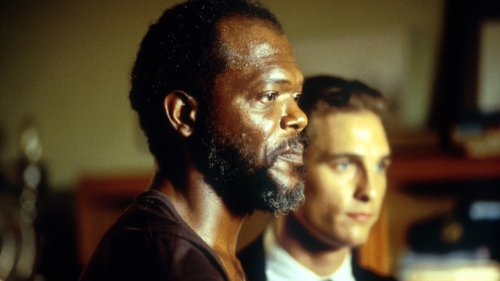
I was looking for something with a strong narrative for week-end reading and came across John Grisham's first (1989) novel that was, according to some random lists and a quotation from the man himself, Grisham's and others' favorite. It was made into a movie with Matthew McConaughy and Samuel L. Jackson, and there have been a couple of book sequels with the same characters.
It definitely feels like a first novel in a few ways. For one thing, you often have trouble telling the author's world view from his main character's. Jake Brigance is a young Mississippi lawyer with generally good values, a lot of ambition, and also a self-conscious mask of good-ol'-boy. He says he fell in love with his wife because she was an old fashioned Southern girl who wanted to stay home and support her man. He uses the N word all the time, like almost all the white people in the book. He refuses to be called a liberal, and loves publicity, especially if he can get publicity and defy the journalists as he does it. He believes (again like most of the white but also the black people in the novel) that his client was justified in planning and carrying out the courthouse slaughter of two two white boys who raped his ten year old daughter. The trick is that local racism dictates says that Carl Lee should fry because he is a black man who killed white men.
Samuel L. Jackson and Matthew McConaughy in movie version of A Time to KillThe novel starts with the rape, which is harrowing at best. The murder of the rapists is well told, and the vicissitudes of the case and trial are gripping and well done. I have a little trouble believing how the KKK operates with almost complete impunity, but I'm not from Mississippi. They beat an old white man who dies, they almost dynamite Jake's house, they kill one of their own for squealing, burn crosses on potential jurors' lawns, shoot at Jake, but miss him and paralyze a national guardsman. Oh, and they finally do manage to burn down Jake's house.
So that may be believable, but it's a lot to take in.
There are a lot of things, however, to quibble about that also strike me as things a beginner couldn't quite integrate into his story. One is a good looking brilliant northern 3rd year law student who shows up to volunteer to help Jake. She does a great job, tries to seduce Jake, but he turns her down. Then she gets kidnapped by the very busy Klan who strip her naked but don't rape or kill her. She is hurt fairly badly, but the weird thing is that she's largely out of the story from then on. Jake and his friends go to see her in the hospital, but she's asleep, and her dad has flown down from Boston to speak for her. That is to say, the guys take over, pretty completely.
There's a woman juror who helps make a compromise that allows the other jurors to come to a verdict, but she's a one-off.
Then there are the local black pastors who are presented as mildly clownish and completely venal and manipulative. Really,there isn't much of anyone to admire, black or white, except maybe, just maybe, the black sheriff.
Jake's mentor Lucien is a Southern lib lawyer who was disbarred essentially for drunkenness. He's maybe my favorite character. There is a lot of drinking in this book and a lot of affection if not support for Southern folkways and prejudices.
It's pretty touch on the red neck community too.
But for all that, it's a readable, energetic story that I never really wanted to give up on.
Wizard of the Pigeons by Megan Lindholm (Robin Hobb)
This has a lot of the sad-sack male protagonist that is my least-favorite quality of Robin Hobb's writing, but I liked it anyhow. Not as much as the Assassin series, probably because the protagonist Fitz in those novelsstarts out as a kid, and kids always have that resilient biological optimism. The only series I really didn't like was the Soldier Son books.
This one is interestingly different, an urban fantasy that starts with the sad sack, Wizard, in the streets of Seattle. It is so much closer to the real world, especially as part of Wizard's sadness is what happened to him as a solider in Vietnam. This is part of his struggle, which is also against a dark force called the Mir, a gray, pervasive, evil dull thing.
Each of the magic characters has definite limits to what can be done with magic. Then it turns out that Wizard has actually, in fact, given himself more rules than he had to. It was a nicely thick world, and to my pleasure got thicker too as I read.
Ava Gardner and the Shawshank Redemption by Stephen King
This is another suggestion from Kenneth C. Davis's Great Short Books. Everyone knows the 1994 movie with Morgan Freeman, but I may like this better. The story is told in King's original novella in the voice of an admitted murderer, Red, a white Mainer. I don't remember in the movie how they explained a black lifer in a Maine prison in the 1930's–were Maine's
prisons integrated? Freeman's work is always worth watching, but I think this probably feels more realistic.
So the novella's voice is an old white lifer talking about prison, talking about the main character, Andy Dufresne. It is pieced together (no doubt an illusion, but one that makes for very good reading) of the stories that float in slow time around a prison. It about how Dufresne survives and prevails and inspires the men around him.
Probably my favorite character is the Warden who is a terrifically mean and unsavory hypocrite Baptist Sunday school superintendent. The scenes (overheard and pieced together, of course) between him and Dufresne are super, as is the scene when Dufresne gets beer for the roof tarring crew.
Honestly, it's a lovable book on so many counts. Wish fulfillment at the end?
Fine by me.
The Sense of an Ending by Julian Barnes
This 2011 book has a great beginning, and a complex but interesting ending. It was my first book by Julian Barnes, and in the end, I couldn't really feel much identity for the narrator, Tony Webster. He just keeps whining about after all his youthful hopes he's become an "average" bloke. For me, it was a little silly: didn't we all imagine as boys and girls heroism in adulthood? He complains that he isn't brave enough for suicide like his friend. It's a real lack of growing up. My adolescence is still vivid in my mind, but I'm really glad is isn't the high point of my life.
So Tony has an interesting story to tell, especially the At School stuff, and the book is cleverly put together, but I just didn't care that much about Tony. This may have been a bad book to read on Kindle. Should one read contemporary British novels in hard copy?
I'll offer some balance with reviews from the Wikipedia article on the book and from
Krkus which calls it a "knockout. What at first seems like a polite meditation on childhood and memory leaves the reader asking difficult questions about how often we strive to paint ourselves in the best possible light."
And finally, the New York Times review.
Since Barnes seems to have a terrific reputation, I thought I'd give him another chance and read.......
Flaubert's Parrot by Julian Barnes
And this one, in spite of requiring some effort, is a lot of fun. It's extremely quirky, and this one I definitely should have read in a hard copy. but well worth your time if you like literature.
The set up is that a retired (or is he just vacationing?) English physician amuses himself by doing research in France on Gustave Flaubert, the author of, probably most famously, Madame Bovary, the scandalous adulteress.
In particular, the doctor wants to see if he can figure out which stuffed parrot on display in France is the one that inspired/oversaw Flaubert's novella Un Coeur Simple, in which a serving woman has a beloved parrot that is probably even more important in her life dead and stuffed than alive.
As he does his research, he picks up lots of bits and pieces about Flaubert's life and travels and friendship circle, and particularly his lover, a poet named Louise Colet. Somewhere about a third of the way in, you realize there's another story being revealed, or hidden, about the doctor and his late wife. Slowly we discover, along with which stuffed parrot might be the model for the famous Loulou, that there is a mystery about his wife, about their relationship, and that the doctor is resistant to telling it.
It's a small, brilliant, and highly literary book. Flaubert comes across as far more interesting than I ever thought he was. We explore adultery. It isn't a book I'd recommend to anyone who hasn't read Bovary or at least Un Coeur Simple. That is to say, it is all about writing and writers and of course also about real life and love, but you get to real life through literature.
I really never read anything like it, though. And this was Barnes' first novel.
So now I have to read at least one more of his books to see if I like his work or not.

Real Life by Brandon Taylor
This novel has been highly praised and is probably more than a little autobiographical. It is extremely intense, to the point
I kept having to put it down and come back just to catch my breath. The main character, Wallace, is an unhappy graduate student whose nematode experiments have been devastatingly contaminated to the point of colony death. Taylor describes this wonderfully, and it helps bring him to the realization he really isn't happy in graduate school.
His excellence in science has always been a way for him to escape a poor and abusive home in Alabama. He is also gay. And Black. He has a friendship group at the Midwestern university where the story takes place over a few days, but he feels too different, estranged from them, even the one who is his lover.
The racial divide and the bland niceness of his friends is part of his suffering. Everyone speaks in a sort of therapeutic jargon, and even his advisor, who is ready to throw him out of the program, says "Are you all right?"
The "Are you all rights?" certainly grated on me. It's quite a wonderful book with its laxer focus on if and how Wallace is going to escape again. It has huggy female friends, rough sex, memories of brutal sex, and those marvelously described nematode experiments.
Gods of Guilt by Michael Connelley
This is the fifth Lincoln Lawyer book, published in 2013, and it strikes me that in the end, Connelly may love his procedures best: police procedure, court procedure. Very satisfying to read,
though.
Micky Haller is a little thinner as a character than Harry Bosch–less tethered in history and a traumatic personal past, but he's also funnier, a kind of Huck Finn in how he thinks he's doing wrong but somehow in his heart he knows it's right–that is, the scum and the guilty also deserve legal representation, and sometimes the scum and apparently guilty aren't guilty at all.
Theres a clichéed angelic daughter in play–Haller is estranged from his teen daughter who thinks he's a bad guy for defending the bad guys. Very Hollywood: the sacred wisdom of children. I believe kids aren't particularly wise, but are always our hope. The wisdom thing tires me out.
There is one sad death of a good guy, no melodramatic twists, only unreeling complications. Quite good.
Black Sun and Fevered Star By Rebecca Roanhorse
I've been on a late-summer vacation tear with epic fantasy. This series is probably the best of the three (see below). Roanhorse is way better-than-competent as a writer, but Fevered Star is another middle book of a trilogy with longeurs.
Still, I've bought the final one and I'm ready, when I've refreshed myself from the over-sugar and fried donut addiction that fantasy gives me.
An especial Roanhorse strength is her hero-anti-hero, a boy who becomes the Crow God. He is like a beloved nation or warrior son: so bloody and death-seeking and yet also human and complex and attractive, even lovable. She seems to be going for a recognition that we can't get rid of human violence, but that there is hope for a kind of control long term.
We'll see if she follows through on that in the final book.
Image by Larry D. Moore, CC BY 4.0, https://commons.wikimedia.org/w/index.php?curid=125547165
The Bone Shard Daughter by Andrea Stewart
I was looking for a fantasy series, and this one is so-far-so-good. It's newish, 2021, and I had to get a cheap used paperback, huge, even though I'd like it better on Kindle just plunging forward into the dark night with the narrative. (Dark night meaning I can read at night on the Kindle.
Instead of the vaguely European Medieval-Renaissance backgrounds of, say, George R.R. and Robin Hobb, this one has a vaguely Chinese setting–foods have a lot of noodles and ginger, there is an emperor. The world seems to consist of floating islands that migrate in season, changing the weather. The emperor is doing weird things, harvesting shards of bone from the skulls of the citizens, all in the name of protecting the empire from a mysterious previous race
Whose statues and murals that always in the past had closed eyes, and the eyes have begun to open...
The shards are taken from children, who sometimes don't survive, and used to create and control "constructs," robots made of animal parts with more and less complex instructions via the bone shards. Meanwhile, the people whose shards they are using die spent and soon.
This is what the emperor does, and now his heir Lin and an adopted boy are being taught and teaching themselves to do what the emperor does. Of course, things get complicated as discoveries are made.
Two characters get first person points of view, Lin and a smuggler named Jovis who is on a quest to find his seven years lost wife. There are a couple of other third person points of view, all getting their own chapters when it's their turn.
Women and men in this world are equally heirs, soldiers, and marriage partners–this is, you can marry any sex you like. But sex itself comes mostly as big feelings and kisses and sinking into the wonderful warmth of the lover. That is, all pre-teen girlish (or is it anime love?)--I suppose it's officially Y.A. My favorite thing so far is is a newly discovered cross among an otter, a primate, and maybe a cat–with horns. They grow fast and bond deeply with their person (one for Jovis and one, at the end, for Lin.
Lots of fun in the series so far.
Ember in the Ashes
A Torch against the Night
A Reaper at the Gates
A Sky Beyond the Storm by Sabaa TahirI finished the Sabaa Tahir Ember series (2015 through 2020). I found them on a list of Best Recent Fantasy somewhere, and obviously I was into them enough to read on, but I also had mixed feelings.
First of all, I read the four big books in three weeks, probably too many too fast. I read three as ebooks borrowed from the library and the last one I just bought because I didn't want to wait.
Tahir starts with a group of young people struggling through a special school to become part of an elite corps of highly trained fighter/assassins called Masks. This is, of course, a fantasy world, with various ethnic or caste groups and some magic. There's only one female student, one of the point of view characters, but the evil commandant of the school is female.
It has plenty of action writing, probably too much for me, but then I'm an old lady who still considers herself a literary novelist and reader of literary novels. Everything moves, and Tahir does an excellent job in world creation–too eclectic for my taste maybe: she mixes vaguely Roman empire material with a sort of Bedouin semi-nomadic world of tribes people, mostly female led. There are some cities run by a semi-free nation of Mariners. And in the empire itself there are strict castes, Martials are at the top, Scholars the slaves, lots of plebeians too. Oh, and also, as the books continue, more and more jinn, efrits, and wights (little buzzy message-carriers not George R.R.'s white walkers).
Looking back over the four books, I think she handles all that well, but for me the constant danger and battles and impossible situations from which the characters almost always escape. There are often about to die horribly at the end of a chapter, Perils of Pauline style. This gets tedious, but a couple of books in, I realized I was reading something called a y.a. romance/fantasy. At least that explained why budding sexual relationship kept being frustrated. She does these hot scenes where the partners have tremors when their lips touch and all sorts of waves through their bodies, and his hand lands on her waist or hip–and then one of them pulls away (no, no this is wrong) or else they are interrupted. Over and over.
And yet--I couldn't stop reading. I'd also say that Tahir gets better at the end of each book and offers an extremely satisfying ending. People finally do have sex, and there is the complexity of the victims having done evil in the past. The evil world-ender himself is mostly sad inside. A few die and return from death, others stay dead, but it has hope at the end.
SOME SHORT REVIEWS AND RECOMMENDATIONS
Elaine Durbach suggests:
Cape May by Chip Cheek
A delicately unfolded, surprisingly sexy tale of a honeymoon that brings two very young, very naive Southerners to Cape May for their honeymoon, and encounters that change them for life.Writers and Lovers by Lily King
This writer just keeps getting better and better. In this story of a would-be author, barely keeping herself afloat with a job as a waitress, she depicts romantic, familial and professional struggles that might all have been overly familiar, but in her hands, become startlingly fresh. I seldom reread any books; this one I dip into over and over, for the sheer pleasure of her word choices.
Danny Williams says: "Emptying boxes of books in the attic today, I saw A Map of the World, and though it's far from Their Houses, both contain a child's creation of a world they understand. Jane Hamilton is a favorite, especially The Short History of a Prince (I could see where it was going, but that's okay) and The Book of Ruth, inventing a consistent voice of a specific person with a specific history and situation. Disobedience not so much for me, but a B- amid a dozen As is a pretty good GPA."
Nikolas Kozloff recommends The Romantic by William Boyd. (Review in The New York Times here.)
Diane Simmons suggests:
A new novel Akmaral (Regal House, 2024) imagines the life of ancient women warriors—they really existed; ask Herodotus-- on the steppes of Central Asia. Using classical texts, along with evidence from recently opened burial mounds, Judith Lindbergh “conjures,” as she writes, the complex story of Akmaral and other women warriors of the Sauromatae, who lived in armor and on horseback, and who were not allowed to mate until they had killed a man in battle. The details of this life--the yurts, the fermented goat milk, the leather armor--are fascinating. But there is much more here than the daily life of fighting and survival. We see too a world haunted by the supernatural, tied to visions, ancient rites and tribal loyalty. Akmaral is a strong fighter—she will become a warrior leader--but she is also a woman which, even in the fifth century B.C.E. can complicate your life. As she shuns one of her own warriors, she falls for a Scythian slave, bears a child, then finds herself in position of impossibly conflicting alliances and betrayals.
Hidden Girls: A Birth Mother’s Story of Reunion and Reckoning by Julia MacDonnell, a memoir, is hard to read and hard to put down. The author, daughter of a well-to-do and image-conscious Catholic family, is the bright, creative one among eight children. Looking for love, a commodity in short supply at home, she becomes pregnant. (It is the late mid-Sixties and neither female contraception nor birth control nor female birth control are available to her.) Immediately, she enters a nightmare of blame, shame and degradation from which, she writes, she has “never fully recovered.” She is sent to a grim home for unwed mothers where her newborn—already beloved-- is immediately taken from her and put up for adoption. Meanwhile everyone—case workers and family alike—make clear that her disgusting secret must never be told. Here, though, some fifty years later Julia MacDonnell tells, taking us on a road trip of the closed adoption system, where unmarried pregnant girls are treated with astonishingly self-righteous cruelty, so that “worthy” families may be provided with healthy newborns. Birth certificates are amended, and courts seal the records; it all becomes, McDonnell writes, a profitable business. Only recently, records have been opened and DNA tests allow adoptees and mothers to find each other. But this too is a painful process, both mother and child struggling to understand the “staggering degree of the original loss.”
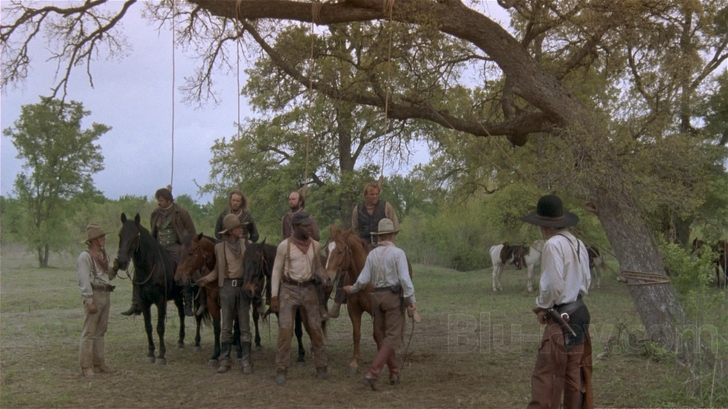
Lonesome Dove, 1986 Pulitzer Prize, Larry McMurtry. From my Western Literature obsession: a novel about a cattle drive from Texas to Montana in the late 19th century. Sounds like 50s TV. But cattle drives were very real, especially after the Civil War when the North lifted its blockade on Southern herds, and before the railroads put the cowboys out of business. In Lonesome Dove, Texan Larry McMurtry goes for a non-stereotypical version of this classic western story. Two ex-Texas Rangers –one silent, one garrulous—try to manage the herd and the crew of complicated young men on a long and dangerous trip. (Full disclosure: my great-grandfather once drove horses, purchased from the Nez Perce, from Oregon to Omaha. Or so it was said.) I read the book and then listened on Audible. Lee Horsley’s delivery reminded me so much of the men I grew up with in Eastern Oregon that I kind of choked up when it ended.
(See our review of Lonesome Dove from 2015)
Lincoln by Gore Vidal . It’s a novel and obviously can’t be compared to the essential studies of Eric Foner or Doris Kearns Goodwin. But my smart friend put it on her best-of-2023 list, so I had to read it, even though I’ve never much liked Vidal. And initially—self-fulfilling prophecy?-- I was not in love with the book, bored and irritated by the gossipy account of the politicians surrounding the new president. Then I calmed down and allowed myself to be won over by the portrait of the canny country boy who didn’t like to eat anything but apples and was addicted to corny stories: “As the preacher said to the widow. . . .” Is his humor a “tic?” little smart alecks asked. But maybe the humor was his way of insisting on being himself in the snake pit of DC; meanwhile---in this telling-- he quietly and unassumingly defied all expectations. In the end—and I have to love this part-- he wouldn’t quit on America, even when the cause seemed hopeless.
(See our review of Lincoln)
Whereabouts by Jhumpa Lahiri. Deceptively subtle first-person vignettes: at first. they seem to be no more than depressed diary entries, depicting a woman in her forties who lives alone in an Italian city. But soon we find the theme: the desire for solitude versus the fear of loneliness a solitary life may bring. It is a dichotomy that must be constantly managed.
The narrator loves the public pool, for example, but skirts the intimacy of the women’s dressing room. She accepts invitations to large gatherings -a festive dinner occasion of a christening—but after 40 minutes can't take the kids, slipping away to walk alone on the beach. She has a lover, but he is married and lives in another city. She doesn't ask which one. And in the quiet of August, with everyone away on vacation, she forms a connection of sorts, buying beloved knickknacks that her neighbor--closing up his late parents’ house-- must part with. She brings the items home and puts them on a shelf where they comfort her. They are not be precious to HER family, but they were precious to A family. In the tense standoff between the desire for solitude and the need for other people, they seem to offer an acceptable compromise.
Tablets Shattered: The End of An American Jewish Century and the Future of American Jewish Life by Joshua Leifer Reviewed by Joe Chuman
The war between Israel and Hamas, Hezbollah, the expansion of hostilities into Lebanon and the missile assault on Israel by Iran have thrust the Jewish state foremost into the headlines. It has also sown new divisions in the American social and politic fabric, further exacerbating tensions and hatred in what is already a deeply divided nation. America's military support of Israel and the accompanying loss of civilian life in Gaza, now exceeding 42,000 dead, the majority innocent women and children, has occasioned fervent demonstrations in support of the Palestinians on college campuses and in the streets. Passions have been aroused on many sides. Those supporting Israel have also been on the barricades.
Zionism, which has long evoked opprobrium, not only among Arab and Muslim populations, but among developing nations, has become a dirty word, equatable with unqualified evil. Zionism was the political movement that brought Israel into existence and created the Jewish state. Those who support Israel will interpret Zionism as the expression of the national self-determination of the Jewish people, long a fundamental precept of universal human rights. For many on the Left, in line with a post-colonial ideology that has become academically fashionable, Israel is excoriated as a “settler colonialist” entity whose very existence is construed as illegitimate.
The rise of pro-Palestinian fervor has spilled over into a resurgence of antisemitism which is unprecedented in the United States at least since the Second World War. Jews have long felt secure and have prospered in America. Current events have shaken that security and have raised the question among many Jews as to whether beneath the veneers of safety and extraordinary accomplishment, Jews in America will re-experience their historical status as the perpetual outsider. Though latent and for the most part muted for decades, antisemitism has become manifest again. Jews now feel vulnerable.
I began this essay on October 7th, the anniversary of the unprecedented and vicious slaughter of 1,200 Israelis by Hamas terrorists, often cited as the greatest murder of Jews since the Holocaust. Israel is experiencing collective trauma, and many American Jews share in the agony of ongoing hostilities.
These events, taking place far away, have raised many painful questions as to the place of Jews with regard to the larger society. It has also raised questions within the American Jewish community as to the place of Israel as a major component of Jewish identity. These questions are by no means new, but they have taken on much greater urgency given the volatility of current events, painful as they are.
It is also a factor, among many others, that figures into current dynamics of what it means to be a Jew in America, and raises concerns and apprehensions about the future of American Judaism. These questions, though brought into stark relief in the moment, bear a long and extremely complex history.
The future of Judaism in America is the subject of recently published Tablets Shattered by journalist Joshua Leifer. This timely book, thoroughly researched and nuanced, is written in a polished, high-minded, and sophisticated style. This is not merely an academic study of American Jewry. Woven through his narrative is a deeply personal and honest exposition of Leifer's identity as a Jew and the evolution of the American Jewish community in the 20th century.
Leifer identifies himself as a “mainline affiliated” Jew, an identity to which he is inextricably attached. But Leifer's Jewish commitments are by no means without their vicissitudes. He is admirably honest and realistic about his changing viewpoints, his angst, and his ambivalences which feed into his conclusions as to where Judaism is heading in America. Tablets Shattered provides an assessment of the rising success of the Jewish community, and leads to the conclusion that it is “cracking and crumbling.” His approach is historical, sociological and political, but it is also a memoir, a personal cri de coeur. Leifer is clearly pessimistic about the American Jewish future, a conclusion for which he provides exhaustive evidence.
I was gripped by Leifer's study. Though he is less than half my age, his struggles with Jewish identity are parallel to my own. While I was educated in an Orthodox synagogue and had an Orthodox bar-mitzvah, and mine was a Jewish home, Jewish practice was minimal. Leifer's commitment to Judaism has run much deeper and his been continuous. Leifer spent his early education in a Jewish day school and as a youth there were multiple stays in Israel. Mine was not a Zionist home. I didn't develop an interest in Israel, or view it as a component of my identity until after the 1967 war, as Leifer notes, many Jews did. After my bar-mitzvah, I moved away from Judaic belief and found meaning in a humanistic world view and a career in the Ethical Culture movement. Though Ethical Culture was excoriated in some Jewish circles as an escape for Jews from their Jewish identity and a fast track toward assimilation, my motives for joining Ethical Culture emerged as a fulfillment of my Jewish values and not in defiance of them. From childhood I always valued my ethics as emerging from my Judaism. My being Jewish comprises my interiority at its deepest levels. There is an adage in Yiddish, “Az ihr hot nicht kein rachmones, vos macht ihr a Yid?” “If you don't have compassion, what makes you a Jew?” Such insight has been a source of personal meaning and pride.
It is that identification that also generates searing personal conflict in light of where Israel has moved politically and ethically, namely solidly to the right. The wanton destruction of innocent life in Gaza brings that conflict into stark relief. In an earlier essay I noted that on a trip to Israel last February, despite the national trauma caused by the unprecedented assault of October 7th, I encountered not a single Israeli, many with whom I ostensibly shared common values, who expressed a word of compassion for the disproportionate killing of innocent lives in Gaza. It is an ethical absence expressed by too many American Jews as well, and I have found it painful in light of what I have always considered central to being Jewish in any justifiable sense.
Both Joshua Leifer and I are leftists, which generates further conflict and distress as pro-Palestinian demonstrations have too readily morphed into a yen for Israel's very destruction, and even beyond, have been an outlet for antisemitism.
But Zionism comprises just one aspect of a much broader thesis. Leifer traces the trajectory of Judaism in America with reference to the evolution of his family through generations. The years from 1881 to 1924 saw the emigration to America of more than two million Jews from Eastern Europe. They were fleeing not only czarist pogroms, but also, in many cases, rabbinic establishments in the search of freedom and new opportunities. In the move across the Atlantic, the new arrivals, who were born into folk Orthodoxy, quickly shed their religion as they sought to assimilate to America and its values. Such was the case with Leifer's family and my own. In my case, my maternal grandparents arrived from Eastern Poland around 1900 and lived in the Lower East Side before moving to the Bronx. Though they lived in the United States for 70 years, they never learned English. Their seven children related to their Old-World parents with muted disdain and became radically secular, one becoming a Stalinist and younger brother a radical Trotskyist. There was an annual Passover Seder, which was formally correct, but devoid of underlying belief or reverence. The only exception was my mother, who was the youngest and who retained some vestige of religious practice within the context of upwardly mobile middle-class aspirations.
As such, sustaining Jewish identity, as Leifer makes clear, involved deliberate effort in light of the blandishments of consumerism and the opportunity for social climbing that America provided. Leifer identifies three pillars around which Jewish identity has been centered that began at the turn of the century and solidified after World War II.
The first was Americanism. America provided promise and the promise was fulfilled. American freedom and opportunity provided a powerful counterweight to the Jewish history of persecution. Jews, as never before, flourished in the new land. But, as Leifer notes, success came at a very severe cost:
“...while Americanism gave much to American Jews, it also exacted a significant and ultimately devastating cost. The theorist of cultural pluralism might have hoped otherwise, but, in practice, fully joining the American project entailed the suppression and surrender of what had been the dominant forms of Eastern European Jewishness: traditionalist Orthodoxy and left-wing radicalism. These were the roots of eastern European Jewry; making it in America required that they be severed.”
In short, in the move to a new and open society, Jews had to create Judaism anew with new institutions fitted to the American environment. It is these institutions and Jewish affiliation that are shredding and now fading away.
The second pillar was Zionism, especially after Israel's founding in 1948 and then again after Israel's dramatic victory in the 1967 war. Israel, as a locus of Jewish identity, as Leifer notes, emerged at mid- century at a time of “embourgeoisement and suburban anomie, when a cultural and religious crisis appeared imminent.” But making Israel and Zionism central to Jewish identity was problematic in that it too was attained as a substitute for religious practice. As Leifer asserts:
“If meaning could not be found in liturgy or in synagogue, it could now be found in fundraising for the United Jewish Appeal, the American Jewish Committee, and the American Israel Public Affairs Committee (AIPAC). American Jews imagined Israel as a moral beacon and Zionism as the secular fulfillment of the religious faith in which they could no longer really believe.”
While Israel, born out of the ashes of the Holocaust, could inspire great pride in American Jews, it has not come without intrinsic problems for American Jewish identity. As implied, while support for Israel became a centerpiece of Jewish identity, nationalism is not a religion. Moreover, Zionist ideology promoted the notion that the authentic Jewish life could only be lived within the Jewish state. Hence many American Zionists found themselves fervently supporting Israel with their passion and their financial generosity while Israel collectively has construed those in the diaspora to be second class Jews.
But with Israel's victory in the 1967 war, and the occupation and settlement of the West Bank and control of Gaza, the politics of supporting Israel dramatically and painfully changed. American military support for Israel grew tremendously and Israeli society and its government moved steadily to the right. American organizations such as AIPAC, the Zionist Organization of America (ZOA), and the Presidents of Major Jewish Organizations, along with their self-appointed leaders, staunchly supported Israeli nationalism and maintained the position, with few exceptions, that Israel could do no wrong. Sustained by, and catering to super-wealthy donors, they postured themselves as speaking for a constituency they did not and do not represent, given that the overriding majority of American Jews remain liberal. Such groups actively have worked to shut down any criticism of Israel, and have actively destroyed those Jewish movements that have lodged dissent, particularly regarding Israeli occupation and settlement of Palestinian lands.
Indeed liberalism is the third pillar of Leifer's framewoek defining the basis of American Jewish life. It was natural for Jews to support liberal causes. Identification with the oppressed came readily, and Jews were actively supportive of the Civil Rights Movement and the feminist movement, and in the 1960s found themselves in the forefront of the New Left and in opposition to the war in Vietnam. Jews supported progressive education and the labor movement. Jewish attorneys championed civil liberties and the separation of church and state, among other progressive initiatives. And Jews have reliable supported the Democratic Party, even, as often noted, when Democratic policy has run against their economic interests. The American Jewish population has been reflexively liberal.
But the embrace of liberalism, as Leifer makes clear, has led to the undoing of American Judaism and points to the central dynamic that has been its cause, often unnoticed or underappreciated. It is a conclusion he often repeats:
“But it soon turned out that what worked for liberal America could not work for Judaism. The idea of obligation-the meaning of mitzvah, the core of Jewish life-fell out of fashion in liberal capitalist culture that sacralizes individual self-expression and self-gratification. The logic of the market reduced all aspects of life to fungible value, and religious practice became, like Pilates or yoga, just another consumer good. In a world of limitless choice and limitless growth, the kind of commitment and restraint required to sustain community increasingly appeared as an unjustifiable and palatable anachronism. By the late twentieth century, American Jews have become such good liberals that they could no longer give themselves compelling reasons for why they should live Jewish lives in terms other than those American liberalism furnished for them.”
A fourth pillar I would add and that Leifer discusses, but I consider weightier, is the significance of the Holocaust. The salience of the Holocaust in Jewish discourse did not emerge until several decades after the War, perhaps owing to its enormity and associative trauma. But once it did, Holocaust memory and its significance for Jewish identity became central to Jewish world consciousness and worked its way into Jewish culture at large. Holocaust museums, memorial events, school curricula and the portrayal of the Holocaust in popular culture became widespread and commonplace.
Yet as Leifer maintains, these pillars have run their course and are unraveling. American ism and liberalism have winnowed away at the religious core that has defined Judaism as Leifer understands it. Religious obligation and practice, and the communal bonds that reinforce them, have been subsumed by the dynamics comprising modern American life. Zionism, which was a benevolent cause for older generations that fostered pride and was a source of identity, for many younger progressive Jews signifies support for an ethno-nationalist militarized state, committed to the oppression and humiliation of seven million Palestinians seemingly without end. It's been noted by some that memorializing the Holocaust sacralizes victimization and bears no relation to active religious practice. And in a few years, with the passing of the last survivors, the Holocaust will move from lived history to memory, and with this shift, its significance and centrality to Jewish identity will most likely grow weaker.
The thinning of the Jewish community is most evident in the increased pace of intermarriage. I was taught early on that marrying out was strictly forbidden and Orthodoxy requires that one's child who weds a Gentile be disowned if not declared dead by one's family. In the 1950s perhaps no more than eight percent of Jews outmarried. Today, if we bracket the Orthodox sector, more than 70 percent of Jews marry someone of a different faith. The shift has been a source of high anxiety in the organized Jewish community, occasioning flurries of studies seeking to pin down with precision the population of Jewish Americans. In earlier decades, Conservative Judaism had been the largest of the three major denominations, followed by Reform. Despite greater visibility, Orthodoxy compromises no more than ten percent of the organized Jewish community. Both Conservative and Reform have greatly declined, though Conservative, which I have long construed as a way station for the immigrant population, more so.
Despite large endowments, libraries, archives and synagogues, the decline is shocking. Leifer cites the following:
“Disaffiliation is a top-down as well as bottom up phenomenon. Enrollment at the existing Reform and Conservative seminaries has dropped in tandem with synagogue membership. The numbers can appear shocking. Across its Los Angeles and New York campuses, the 2022-2023 Hebrew Union College rabbinical student class had only fourteen students. At the Conservative JTS (Jewish Theological Seminary) in New York, the same year's first-year rabbinical class had only seven.”
“At mid-century, the Reform and Conservative movements were mammoth organizations and, like the mammoths seem headed toward extinction- not tomorrow, but inevitably...The once vast suburban architecture of liberal Jewish life is becoming a mausoleum to a religious civilization that has now passed.”
What has been the cause of this decline and what, if anything, can be done to reverse it?
American society has dramatically changed in the past half century and with this change has come the advance of pluralism, women's equality and the movement of gays into mainstream society. It was inevitable that the non-Orthodox streams of Judaism, as has been the case with mainline Protestant churches, would be compelled to adjust to these changes. The effects of postmodernism on society at-large have given rise to post-denominational- and post-God- movements within Judaism and new forms of Jewish expressions to keep pace with cultural changes. The ordination of women as rabbis was a long-standing issue of debate and contention within the Reform movement and then in Conservative Judaism. What of gay marriage? Gay and lesbian rabbis? With the explosive reality of intermarriage, Reform especially has wrestled with the issue of placing the non-Jewish spouse in the synagogue. Can he or she be a member of the temple? Hold office? Participate in religious rituals? Traditional Judaism is matrilineal. If a child's mother is Jewish, so is the child and the father is irrelevant in this regard. Reform elected to alter this millennial doctrine so that a child of a Jewish father and non-Jewish mother could be construed as a Jew as long as there was a stated pledge to raise the child as such.
In general, the pressures of society have resulted in liberal Judaism opting for greater inclusion, and as a result, liberalizing still further. But have such efforts to be relevant to the times been propitious for Judaism's future, or have they been a cause of the decline? I recall a conversation with an older friend, a retired Reform rabbi, who stated his discomfort when walking through the corridors of the temple where he had long served hearing the sound of Christmas carols sung by the congregation's choir. At what point does Judaism lose its defining character? Leifer notes that there are those who conclude that the decline of Jewish commitment and affiliation can be attributed to the very accommodations social changes have wrought.
But these changes have also brought new and creative expressions of Judaism, as Leifer states, along the periphery. There are experimental forms, many brought by gay and lesbian Jews, that involve the reinvention of ritual and liturgy inclusive of music, storytelling, theater and more, much reflective of current political and social sensibilities. There is borrowing from avant-garde trends, even the syncretistic inclusion of practices from other traditions.
Clearly Leifer is admiring of the creativity. Yet even here, in an effort to transform Judaism in tune with current values and political movements, he remains uncertain and discomforted, and his misgivings go to the heart of his thesis.
The problem with contemporary Judaism is not its appropriation of new forms. The dynamics run much deeper and reach far beyond internal Jewish issues. The problem is the primacy of individualism that defines American life. It is a reality that Leifer often repeats:
“...for most of Judaism's existence, being Jewish meant recognizing Judaism's binding framework, even if one struggles with, bristled at, or neglected, whether with guilt or relish, its stipulations. Contemporary Jewish life, by contrast, appears to rest on a roughly opposite axiom. While most American Jews describe themselves as proud to be Jewish, they also seem to believe that such a declaration exists independent of any set of obligations-that it requires no adherence, let alone knowledge, of Jewish law. Jewishness today has become more of an identity to be possessed than a coherent set of practices. Self -gratification and individual preference have supplanted commandedness and commitment to community.”
“It is the liberal-individualist mentality-not queer inclusion or gender egalitarianism-that is responsible for mainline affiliated Judaism's demise.”Leifer has gotten it exactly right. It is as if Robert Putnam and his thesis proffered in Bowling Alone is looking over Leifer' shoulder. In my view, American society is characterized by hyper-individualism that has led to the breakdown of organizational and institutional affiliation of all types, including religious ones. Leifer does reference the meteoric decline of Protestant churches, noting that some scholars estimate that 6,000 to 10,000 churches close down every year. Sociologically, synagogues are subject to precisely the same forces.
While Leifer is clearly intrigued with the creativity of new expressions of Judaism he has his doubts in a way that reveals the internal nature of his own Jewish commitments and what he believes Judaism needs to be. He closes his book with a sentiment which I understand and with which, in a broader sense, I completely concur. In a manner that is admirably revealing, Leifer notes as follows:
“Most of all, I have become convinced of the radical potential of traditional Judaism...I believe that a life centered on the commandments, on mitzvot, is a good life in and of itself. In our current moment, it is also a profoundly and radically countercultural one...Judaism is a religion of limits and obligation- two concepts utterly opposed to the dominant currents of contemporary life. Our liberal capitalist culture celebrates boundless growth, infinite choice, and instant gratification. Traditional Judaism, by contrast, teaches the merits of long term commit, patience and restraint, and commitment with one's lot.
Whereas liberal capitalism glorifies the individual while condemning him to an atomized and isolated existence, traditional Judaism requires that life be lived with and for others-in obligated community.”
“Especially in times like ours, I understand that these may seem like conservative values. In a sense, they are. But I have arrived to them through my left-wing convictions, not despite them.”
“To be clear, I don't think embracing tradition means relinquishing important progressive commitments such as feminism, anti-racism, or opposition to the occupation of the West Bank and Gaza. It simply means realizing these commitments differently.”
Here I completely agree. There can be no freedom without restraint. There can be no freedom for oneself without obligation and responsibility to others and to higher, more enduring, values. There can be no individual without community. It is such commitments that deepen life's meaning. And so, Joshua Leifer has not headed for the exit. He has chosen to recommit himself to his Judaism, its practices and obligations,and to Israel, and fight whatever battles that need to be fought from the inside. Whether he will find others like him in sufficient numbers to ensure the Jewish future, he has left us with many reasons to doubt.
Leifer's treatment of Orthodox Judaism is relegated to a single chapter. It deals primarily with the Haredi community in Lakewood, New Jersey, from which his wife comes. He is admiring of the Haredi devotion to transcendent values, to community and family. But clearly he refutes the parochialism and conservatism that are constitutive of what he finds in Lakewood. Oddly a major omission in Leifer's study is a discussion of modern Orthodoxy, which in many places is vibrant and thriving. My childhood synagogue was the Queens Jewish Center in Forest Hills. It was the first of what is now a row of a dozen Orthodox synagogues and yeshivas that line 108th street in my old neighborhood. The suburb of Teaneck, New Jersey, where I worked for 50 years, is home to perhaps 15 Orthodox shuls. It is one of several communities in the New York area where modern Orthodoxy is growing.
As noted, Leifer views American Judaism through a sociological and historical lens. He does not deal with the philosophical and metaphysical underpinning of Jewish belief. Conventionally, Judaism is seen primarily as dealing with behavior, the living out of the mitzvot. But belief cannot be fully discounted. At a minimum, Judaic commitment requires at least a belief that something not of this world occurred on Sinai. Jewish liturgy is inextricably theocentric, and metaphorical reinterpretation can only be applied so far. For me, belief in God, or rather the absence of it, has raised radical questions as to how I construe and construct my Jewish identity. Leifer does not engage issues of belief and, in my view, his work would be more complete if he had.
Despite these omissions, Tablets Shattered will generate extensive discussion within the Jewish community. It is worthy of much attention. And rightly so. It could not be more relevant to the contemporary Jewish experience in America. It is written with sophistication and in a powerful style. It is erudite but personal and admirably honest. Leifer is committed to speaking the truth as he sees it and without reservation. And given our fraught times and the volatility of the moment, Leifer's thesis also partakes of courage.
GOOD READING & LISTENING ONLINE AND OFF
Diane Simmons talking about The Courtship of Eva Eldridge, now an audio book! See our review here.
ESPECIALLY FOR WRITERS
Check out Cynthia Swanson on going from best-selling commercial author to self-publishing.
Take a look at this article from Literary Hub by Ayeşgül Savaş on creating a clock for your story. She recommends these books for their use of time: The Human Zoo by Sabina Murray; Intimacies by Katie Kitamura; and Mrs Dalloway by Virginia Woolf.
Don't miss the latest installment of Danny Williams's Adventures in Editing--July 2024. Editor and Writer Danny Williams tells amusing tales of editing--and passes on some serious hints for writers at the same time!
ANNOUNCEMENTS
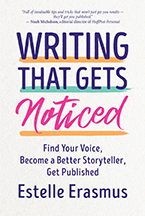
Check out Estelle Erasmus's book on getting nonfiction writing noticed:
More on Estelle Erasmus: www.estelleserasmus.com (sign up for her newsletter);WIRED: How toResist the Temptation of AI When Writing ; Writer's Digest: What to Do to Pre-Launch to Get Your Book Noticed ; Shondaland: I'm Learning to Listen in New Ways
Kelly Watt's The Weeping Degree is Now Available!Kelly Watt's The Weeping Degree: How Astrology Saved Me From Suicide – is a raw and forbidding new collection of poetry and prose by award-winning author Kelly Watt.
Kelly’s gritty collection of poetry and flash prose reveals the biography of a trauma, following the ripple effect of childhood abandonment and sexual abuse as it echoes throughout the author’s life, slowly transforming through time from a wound to a gift. Inspired by the author's own challenging astrological signatures, in these poems Watt turns to astrology and Buddhism to make sense of her encounters with the dark side of the soul. Divided into three distinct sections: The Home for Little Girls, The Buddha and The Pink Futon, and Hands Across the World, this book travels the globe; beginning in the silent shadows of foster care in a bleak Scarborough suburb, and emerging to the light and sound of Sanskrit chanting in a Tibetan Buddhist monastery in Nepal.
Written for poetry lovers, spiritual seekers, and astrology aficionados alike, this collection will take you on a wild ride, where poetry is a sacred alchemical art; a destination where our deepest sorrows are transmuted through imagination and creativity to wonder and joy.
Praise for The Weeping Degree:
What do dead girls need in the afterlife? They need the poems of Kelly Watt so that the daffodils will return to run rampant over the ground with their crazy yellow hope.
--Paul Lisson, poet and editor of HA&L, Hamilton Arts & Letters Magazine.
Kelly Watt has taken the darkest, most horrifying moments of her young life and made them into a groundbreaking work of beautiful words. The Weeping Degree is more than a triumph of poetic virtuosity; it is a testament to Watt’s moral courage, her tenacity, and to her faith in the ability to heal.
–Ruth Edgett, author, blogger, reviewer.
Lewis Brett Smiler has a new story, "The Sculptor," at Anotherealm.com, a journal of speculative fiction. It's pretty scary: a lawyer starts seeing frightening links between a movie and his own life. And the main characters in the movie don't make it out alive. Here is the link: The Sculptor by Lewis Brett Smiler (anotherealm.com)
Paul Rabinowitz has had several poems and more published recently (see his webpage here). He will also be appearing at readings in NYC: Saturday, Sept 21 at Fort Tryon Park, 3-4PM Saturday, Oct. 19 at Chakra's Restaurant 7PM (Fundraiser for Uptown Dance Collective) Sunday, Oct. 27 at P&T Knitwear Bookstore 5-7PM @wordshednyc with Margaret R. Sáraco Friday, March 21 Adverse Absraction 6PM at Otto's Shrunken Head (East Village). Upcoming in 2025 is his first book of short stories called The Ending and Other Short Works.
Ernie Brill writes with his latest news: "I’m immersed in sending out work and finishing a novel about the historic San Francisco State student strike but I wanted to let you know about my recently published book of poetry, Journeys of Voices and Choices (Human Error Press, Wendell, MA, January2024). 115 poems, blurbs by Leslie Simon, Ousmane Power Greene, Michael Krasny, Truing Tran, and Michael Krasny. The book is selling on Amazon!"
Danny Williams is still offering free samples of his editing services! He says, "Editing services for which I've actually been paid money for over the past 35 or so years. (If you want details on the kind of work I've done, contact me and I'll tell you what I can remember. The list stretches back to mimeograph days in the mid-1960s.) Send me some words, and I'll spend about two hours reading them and responding in some way which I believe might be useful. I've been averaging about two writers a year taking me up on this. That comes out to about 40 seconds of my time per day, so I believe I can take on some more. Maybe I'll think of a way I might be able to help you, or maybe not. Whatever. I love doing this stuff, everything from sitting on the virtual front porch with a writer and chatting about an idea they have, to getting a manuscript finalized and finding the right publisher. Write Danny Williams at editorwv@hotmail.com
Latest issue of the Jewish Literary Journal is now out.
Ed Davis Literary News
BUYING BOOKS MENTIONED IN THIS NEWSLETTER
A not-for-profit alternative to Amazon.com is Bookshop.org which sends a percentage of every sale to a pool of brick-and-mortar bookstores. You may also direct the donation to a bookstore of your choice. Lots of individuals have storefronts there, too including me.
If a book discussed in this newsletter has no source mentioned, don’t forget that you may be able to borrow it from your public library as either a hard copy or as an e-book.
You may also buy or order from your local independent bookstore. To find a bricks-and-mortar store, click the "shop indie" logo left. Kobobooks.com sells e-books for independent brick-and-mortar bookstores.
The largest unionized bookstore in America has a web store at Powells Books. Some people prefer shopping online there to shopping at Amazon.com. An alternative way to reach Powell's site and support the union is via http://www.powellsunion.com. Prices are the same but 10% of your purchase will go to support the union benefit fund.
I have a lot of friends and colleagues who despise Amazon. There is a discussion about some of the issues back in Issue # 184, as well as even older comments from Jonathan Greene and others here.
Another way to buy books online, especially used books, is to use Bookfinder or Alibris. Bookfinder gives the price with shipping and handling, so you can see what you really have to pay. Another source for used and out-of-print books is All Book Stores.
Paperback Book Swap is a postage-only way to trade physical books with other readers.
Ingrid Hughes suggests another "great place for used books which sometimes turn out to be never-opened hard cover books is Biblio. She says, "I've bought many books from them, often for $4 including shipping."
If you use an electronic reader (all kinds), don't forget free books at the Gutenberg Project—mostly classics (copyrights pre-1927). Also free from the wonderful folks at Standard E-books are redesigned books from the Gutenberg Project and elsewhere--easier to read and more attractive.
RESPONSES TO THIS NEWSLETTER
Please send responses to this newsletter directly to Meredith Sue Willis . Unless you say otherwise, your letter may be edited for length and published in this newsletter.
LICENSE
Books for Readers Newsletter by Meredith Sue Willis is licensed under a Creative Commons Attribution-NoDerivs 3.0 Unported License. Permissions beyond the scope of this license may be available from Meredith Sue Willis. Some individual contributors may have other licenses.
Meredith Sue Willis Home
Meredith Sue Willis, the producer of this occasional newsletter, is a writer and teacher and enthusiastic reader. Her books have been published by Charles Scribner's Sons, HarperCollins, Ohio University Press, Mercury House, West Virginia University Press, Monteymayor Press, Teachers & Writers Press, Mountain State Press, Hamilton Stone Editions, and others. She teaches at New York University's School of Professional Studies.
BACK ISSUES
#236 Sabaa Tahir, Rebecca Roanhorse, Julian Barnes, Jane Austen, Brandon Taylor, Joshua Leifer, Pauletta Hansel, Carter Sickel, Stephen King, and reviews by Joe Chuman, Elaine Durbach, Eddy Pendarvis, Diane Simmons, Joel Weinberger, Danny Williams--and more!
#235 James Lee Burke; Kate DiCamillo; Donna Meredith; Elana Ferrante; Tana French; Joe Conason; Nadine Gordimer; Jamaica Kincaid; Ian McEwan; Cat Pleska, Illyon Woo; with reviews by Joe Chuman and Edwina Pendarvis; and more!
#234 Robert Graves, Kathy Manley, Soman Chainani, Marie Tyler McGraw, James Welch, Elmore Leonard, Jennifer Browne, Dennis Lehane, Primo Levi, Elmore Leonard, James McBride. Reviews by Martha Casey, Dreama Frisk, and Diane Simmons--and a poem by Dreama Frisk!
#233 Ursula LeGuin, Ford Madox Ford, Elmore Leonard, Deborah Clearman, Susan Abulhawa, Agatha Christie, Oscar Silver, Jeff Lindsay, Linda Parsons, Mary Roberts Rinehart, Philip Roth, Lisa Scottoline. Reviews by Joe Chuman and Felicia Mitchell.
#232 Jim Minick, Clarice Lispector, The Porch Poems, George du Maurier, Louise Fitzhugh, Natalia Ginzburg, Marilynne Robinson; Kathleen Watt; Hambly, Connelly, Alison Hubbard, Imogen Keeper, James McBride, Jenny Offill. Reviews by Hilton Obenzinger, Eddy Pendarvis, Diane Simmons, Suzanne McConnell, and Christine Willis.
#231 Triangle shirtwaist fire, Anthony Burgess, S.A. Cosby, Eva Dolan, Janet Campbell Hale, Barbara Hambly, Marc Harshman, P.D. James, Michael Lewis, Mrs. Oliphant, Paul Rabinowitz, Nora Roberts, Strout, Tokarczuk. Review by Dreama Frisk.
#230 Henry Adams, Tsitsi Dangarembga, Jonathan Lethem, Magda Teter, Mary Jennings Hegar, Chandra Prasad, Timothy Russell, Carter Taylor Seaton, Edna O'Brien, Martha Wells, Thomas Mann, Arnold Bennett, and more. Reviews by Mary Lucille DeBerry, Joe Chuman, John Loonam, Suzanne McConnell, and Edwina Pendarvis.
#229 John Sandford, Dr. J. Nozipo Maraire, Rex Stout; Larry Schardt; Martha Wells; Henry Makepeace Thackery; about Edvard Munch;Erik Larson. Reviews and interviews by John Loonam and Diane Simmons.
#228 Edward P. Jones, Denton Loving, Honorée Fanonne Jeffers. Lee Martin, Jesmyn Ward, Michelle Zauner, Valérie Perrin, Philip K. Dick, Burt Kimmelman. Reviewes by Ernie Brill, Joe Chuman, Eddy Pendarvis, Diane Simmons, & Danny Williams.
#227 Cheryl Denise, Larissa Shmailo, Eddy Pendarvis, Alice McDermott, Kelly Watt, Elmore Leonard, Frances Hodgson Burnett, Suzy McKee Charnas, and more.
#226 Jim Minick, Gore Vidal, Valeria Luiselli, Richard Wright, Kage Baker, Suzy McKee Charnas, Victor Depta, Walter Mosley. David Hollinger reviewed by Joe Chuman, and more.
#225 Demon Copperhead, Thomas Hardy, Miriam Toews, Kate Chopin, Alberto Moravia, Elizabeth Strout, McCullers, Garry Wills, Valerie Nieman, Cora Harrison. Troy Hill on Isaac Babel; Belinda Anderson on books for children; Joe Chuman on Eric Alterman; Molly Gilman on Kage Baker; and lots more.
#224 The 1619 Project, E.M. Forster. Elmore Leonard, Pledging Season by Erika Erickson Malinoski. Emily St. John Mandel, Val Nieman, John O'Hara, Tom Perrotta, Walter Tevis, Sarah Waters, and more.
#223 Amor Towles, Emily St. John Mandel, Raymond Chandler, N.K. Jemisin, Andrew Holleran, Anita Diamant, Rainer Maria Rilke, and more, plus notes and reviews by Joe Chuman, George Lies, Donna Meredith, and Rhonda Browning White.
#222 Octavia Butler, Elizabeth Gaskell, N.K. Jemisin, Joseph Lash, Alice Munro, Barbara Pym, Sally Rooney, and more.
#221 Victor Serge, Greg Sanders, Maggie O'Farrell, Ken Champion, Barbara Hambly, Walter Mosely, Anne Roiphe, Anna Reid, Randall Balmer, Louis Auchincloss. Reviews by Joe Chuman and Chris Connelly
#220 Margaret Atwood, Sister Souljah, Attica Locke, Jill Lepore, Belinda Anderson, Claire Oshetsky, Barbara Pym, and Reviews by Joe Chuman, Ed Davis, and Eli Asbury
#219 Carolina De Robertis, Charles Dickens, Thomas Fleming, Kendra James, Ashley Hope Perez, Terry Pratchett, Martha Wells. Reviews by Joe Chuman and Danny Williams.
#218 Ed Myers, Eyal Press, Barbara Kingsolver, Edwidge Danticat, William Trevor, Tim O'Brien. Reviews by Joe Chuman and Marc Harshman.
#217 Jill Lepore; Kathleen Rooney; Stendhal; Rajia Hassib again; Madeline Miller; Jean Rhys; and more. Reviews and recommendations by Joe Chuman, Ingrid Hughes, Peggy Backman, Phyllis Moore, and Dan Gover.
#216 Rajia Hassib; Joel Pechkam; Robin Hobb; Anne Hutchinson; James Shapiro; reviews by Joe Chuman and Marc Harshman; Fellowship of the Rings
#215 Julia Alvarez, Karen Salyer McElmurray, Anne Brontë, James Welch, Veronica Roth, Madeline Martin, Barack Obama, Jason Trask, Katherine Anne Porter & more
#214 Brit Bennet, Oyinkan Braithwaite, Robin Hobb, Willliam Kennedy, John Le Carré, John Loonam on Elana Ferrante, Carole Rosenthal on Philip Roth, Peggy Backman on Russell Shorto, Helen Weinzweig, Marguerite Yourcenar, and more.
#213 Pauletta Hansen reviewed by Bonnie Proudfoot; A conversation about cultural appropriation in fiction; T.C. Boyle; Eric Foner; Attica Locke; Lillian Roth; The Snake Pit; Alice Walker; Lynda Schor; James Baldwin; True Grit--and more.
#212 Reviews of books by Madison Smartt Bell, James Lee Burke, Mary Arnold Ward,Timothey Huguenin, Octavia Butler, Cobb & Seaton, Schama
#211 Reviews of books by Lillian Smith, Henry James, Deborah Clearman, J.K. Jemisin, Donna Meredith, Octavia Butler, Penelope Lively, Walter Mosley. Poems by Hilton Obenzinger.
#210 Lavie Tidhar, Amy Tan, Walter Mosley, Gore Vidal, Julie Otsuka, Rachel Ingalls, Rex Stout, John Updike, and more.
#209 Cassandra Clare, Lissa Evans, Suzan Colón, Damian Dressick, Madeline Ffitch, Dennis Lehane, William Maxwell, and more.
#208 Alexander Chee; Donna Meredith; Rita Quillen; Mrs. Humphy Ward; Roger Zelazny; Dennis LeHane; Eliot Parker; and more.
#207 Caroline Sutton, Colson Whitehead, Elaine Durbach, Marc Kaminsky, Attica Locke, William Makepeace Thackery, Charles Willeford & more.
#206 Timothy Snyder, Bonnie Proudfoot, David Weinberger, Pat Barker, Michelle Obama, Richard Powers, Anthony Powell, and more.
#205 George Eliot, Ernest Gaines, Kathy Manley, Rhonda White; reviews by Jane Kimmelman, Victoria Endres, Deborah Clearman.
#204 Larissa Shmailo, Joan Didion, Judith Moffett, Heidi Julavits, Susan Carol Scott, Trollope, Walter Mosley, Dorothy B. Hughes, and more.
#203 Tana French, Burt Kimmelman, Ann Petry, Mario Puzo, Anna Egan Smucker, Virginia Woolf, Val Nieman, Idra Novey, Roger Wall.
#202 J .G. Ballard, Peter Carey, Arthur Dobrin, Lisa Haliday, Birgit Mazarath, Roger Mitchell, Natalie Sypolt, and others.
#201 Marc Kaminsky, Jessica Wilkerson, Jaqueline Woodson, Eliot Parker, Barbara Kingsolver. Philip Roth, George Eliot and more.
#200 Books by Zola, Andrea Fekete, Thomas McGonigle, Maggie Anderson, Sarah Dunant, J.G. Ballard, Sarah Blizzard Robinson, and more.
#199 Reviews by Ed Davis and Phyllis Moore. Books by Elizabeth Strout, Thomas Mann, Rachel Kushner, Craig Johnson, Richard Powers.
#198 Reviews by Belinda Anderson, Phyllis Moore, Donna Meredith, Eddy Pendarvis, and Dolly Withrow. Eliot, Lisa Ko, John Ehle, Hamid, etc.
#197 Joan Silber, Chimamanda Ngozi Adichie, Alexander Hamilton, Eudora Welty, Middlemarch yet again, Greta Ehrlich, Edwina Pendarvis.
#196 Last Exit to Brooklyn; Joan Didion; George Brosi's reviews; Alberto Moravia; Muriel Rukeyser; Matthew de la Peña; Joyce Carol Oates
#195 Voices for Unity; Ramp Hollow, A Time to Stir, Patti Smith, Nancy Abrams, Conrad, N.K. Jemisin, Walter Mosely & more.
#194 Allan Appel, Jane Lazarre, Caroline Sutton, Belinda Anderson on children's picture books.
#193 Larry Brown, Phillip Roth, Ken Champion, Larissa Shmailo, Gillian Flynn, Jack Wheatcroft, Hilton Obenziner and more.
#192 Young Adult books from Appalachia; Virginia Woolf's To the Lighthouse; Michael Connelly; Middlemarch; historical murders in Appalachia.
#191 Oliver Sacks, N.K. Jemisin, Isabella and Ferdinand and their descendents, Depta, Highsmith, and more.
#190 Clearman, Eyes Glowing at the Edge of the Woods, Doerr, Octavia Butler, Colson Whitehead, Miss Fourth of July, Goodbye and more.
#189 J.D. Vance; Mitch Levenberg; Phillip Lopate; Barchester Towers; Judith Hoover; ; Les Liaisons Dangereuses; short science fiction reviews.
#188 Carmen Ferreiro-Esteban; The Hemingses of Monticello; Marc Harshman; Jews in the Civil War; Ken Champion; Rebecca West; Colum McCann
#187 Randi Ward, Burt Kimmelman, Llewellyn McKernan, Sir Walter Scott, Jonathan Lethem, Bill Luvaas, Phyllis Moore, Sarah Cordingley & more
#186 Diane Simmons, Walter Dean Myers, Johnny Sundstrom, Octavia Butler & more
#185 Monique Raphel High; Elizabeth Jane Howard; Phil Klay; Crystal Wilkinson
#184 More on Amazon; Laura Tillman; Anthony Trollope; Marily Yalom and the women of the French Revolution; Ernest Becker
#183 Hilton Obenzinger, Donna Meredith, Howard Sturgis, Tom Rob Smith, Daniel José Older, Elizabethe Vigée-Lebrun, Veronica Sicoe
#182 Troy E. Hill, Mitchell Jackson, Rita Sims Quillen, Marie Houzelle, Frederick Busch, more Dickens
#181 Valerie Nieman, Yorker Keith, Eliot Parker, Ken Champion, F.R. Leavis, Charles Dickens
#180 Saul Bellow, Edwina Pendarvis, Matthew Neill Null, Judith Moffett, Theodore Dreiser, & more
#179 Larissa Shmailo, Eric Frizius, Jane Austen, Go Set a Watchman and more
#178 Ken Champion, Cat Pleska, William Demby's Beetlecreek, Ron Rash, Elizabeth Gaskell, and more.
#177 Jane Hicks, Daniel Levine, Constance Fenimore Woolson, Ken Chamption, Patricia Harman
#176 Robert Gipe, Justin Torres, Marilynne Robinson, Velma Wallis, Larry McMurty, Charlotte Brontë, Henry James, Fumiko Enchi, Shelley Ettinger
#175 Lists of what to read for the new year; MOUNTAIN MOTHER GOOSE: CHILD LORE OF WEST VIRGINIA; Peggy Backman
#174 Christian Sahner, John Michael Cummings, Denton Loving, Madame Bovary
#173 Stephanie Wellen Levine, S.C. Gwynne, Ed Davis's Psalms of Israel Jones, Quanah Parker, J.G. Farrell, Lubavitcher girls
#172 Pat Conroy, Donna Tartt, Alice Boatwright, Fumiko Enchi, Robin Hobb, Rex Stout
#171 Robert Graves, Marie Manilla, Johnny Sundstrom, Kirk Judd
#170 John Van Kirk, Carter Seaton,Neil Gaiman, Francine Prose, The Murder of Helen Jewett, Thaddeus Rutkowski
#169 Pearl Buck's The Exile and Fighting Angel; Larissa Shmailo; Liz Lewinson; Twelve Years a Slave, and more
#168 Catherine the Great, Alice Munro, Edith Poor, Mitch Levenberg, Vonnegut, Mellville, and more!
#167 Belinda Anderson; Anne Shelby; Sean O'Leary, Dragon tetralogy; Don Delillo's Underworld
#166 Eddy Pendarvis on Pearl S. Buck; Theresa Basile; Miguel A. Ortiz; Lynda Schor; poems by Janet Lewis; Sarah Fielding
#165 Janet Lewis, Melville, Tosltoy, Irwin Shaw!
#164 Ed Davis on Julie Moore's poems; Edith Wharton; Elaine Drennon Little's A Southern Place; Elmore Leonard
#163 Pamela Erens, Michael Harris, Marlen Bodden, Joydeep Roy-Battacharya, Lisa J. Parker, and more
#162 Lincoln, Joseph Kennedy, Etel Adnan, Laura Treacy Bentley, Ron Rash, Sophie's Choice, and more
#161 More Wilkie Collins; Duff Brenna's Murdering the Mom; Nora Olsen's Swans & Klons; Lady Audley's Secret
#160 Carolina De Robertis, The Immortal Life of Henrietta Lacks, Ross King's The Judgment of Paris
#159 Tom Jones. William Luvaas, Marc Harshman, The Good Earth, Lara Santoro, American Psycho
#158 Chinua Achebe's Man of the People; The Red and the Black; McCarthy's C.; Farm City; Victor Depta;Myra Shapiro
#157 Alice Boatwright, Reamy Jansen, Herta Muller, Knut Hamsun, What Maisie Knew; Wanchee Wang, Dolly Withrow.
#156 The Glass Madonna; A Revelation
#155 Buzz Bissinger; reader suggestions; Satchmo at the Waldorf
#154 Hannah Brown, Brad Abruzzi, Thomas Merton
#153 J.Anthony Lukas, Talmage Stanley's The Poco Fields, Devil Anse
#152 Marc Harshman guest editor; John Burroughs; Carol Hoenig
#151 Deborah Clearman, Steve Schrader, Paul Harding, Ken Follet, Saramago-- and more!
#150 Mitch Levenberg, Johnny Sundstrom, and Isabel Wilkerson's The Warmth of Other Suns.
#149 David Weinberger's Too Big to Know; The Shining; The Tiger's Wife.
#148 The Moonstone, Djibouti, Mark Perry on the Grimké family
#147 Jane Lazarre's new novel; Johnny Sundstrom; Emotional Medicine Rx; Walter Dean Myers, etc.
#146 Henry Adams AGAIN! Also,Fun Home: a Tragicomic
#145 Henry Adams, Darnell Arnoult, Jaimy Gordon, Charlotte Brontë
#144 Carter Seaton, NancyKay Shapiro, Lady Murasaki Shikibu
#143 Little America; Guns,Germs, and Steel; The Trial
#142 Blog Fiction, Leah by Seymour Epstein, Wolf Hall, etc.
#141 Dreama Frisk on Hilary Spurling's Pearl Buck in China; Anita Desai; Cormac McCarthy
#140 Valerie Nieman's Blood Clay, Dolly Withrow
#139 My Kindle, The Prime Minister, Blood Meridian
#138 Special on Publicity by Carter Seaton
#137 Michael Harris's The Chieu Hoi Saloon; Game of Thrones; James Alexander Thom's Follow the River
#136 James Boyle's The Creative Commons; Paola Corso, Joanne Greenberg, Monique Raphel High, Amos Oz
#135 Reviews by Carole Rosenthal, Jeffrey Sokolow, and Wanchee Wang.
#134 Daniel Deronda, books with material on black and white relations in West Virginia
#133 Susan Carpenter, Irene Nemirovsky, Jonathan Safran Foer, Kanafani, Joe Sacco
#132 Karen Armstrong's A History of God; JCO's The Falls; The Eustace Diamonds again.
#131 The Help; J. McHenry Jones, Reamy Jansen, Jamie O'Neill, Michael Chabon.
#130 Lynda Schor, Ed Myers, Charles Bukowski, Terry Bisson, The Changing Face of Anti-Semitism
#129 Baltasar and Blimunda; Underground Railroad; Navasky's Naming Names, small press and indie books.
#128 Jeffrey Sokolow on Histories and memoirs of the Civil Rights Movement
#127 Olive Kitteridge; Urban fiction; Shelley Ettinger on Joyce Carol Oates
#126 Jack Hussey's Ghosts of Walden, The Leopard , Roger's Version, The Reluctanct Fundamentalist
#125 Lee Maynard's The Pale Light of Sunset; Books on John Brown suggested by Jeffrey Sokolow
#124 Cloudsplitter, Founding Brothers, Obenzinger on Bradley's Harlem Vs. Columbia University
#123 MSW's summer reading round-up; Olive Schreiner; more The Book Thief; more on the state of editing
#122 Left-wing cowboy poetry; Jewish partisans during WW2; responses to "Hire a Book Doctor?"
#121 Jane Lazarre's latest; Irving Howe's Leon Trotsky; Gringolandia; "Hire a Book Doctor?"
#120 Dreama Frisk on The Book Thief; Mark Rudd; Thulani Davis's summer reading list
#119 Two Histories of the Jews; small press books for Summer
#118 Kasuo Ichiguro, Jeanette Winterson, The Carter Family!
#117 Cat Pleska on Ann Pancake; Phyllis Moore on Jayne Anne Phillips; and Dolly Withrow on publicity
#116 Ann Pancake, American Psycho, Marc Harshman on George Mackay Brown
#115 Adam Bede, Nietzsche, Johnny Sundstrom
#114 Judith Moffett, high fantasy, Jared Diamond, Lily Tuck
#113 Espionage--nonfiction and fiction: Orson Scott Card and homophobia
#112 Marc Kaminsky, Nel Noddings, Orson Scott Card, Ed Myers
#111 James Michener, Mary Lee Settle, Ardian Gill, BIll Higginson, Jeremy Osner, Carol Brodtick
#110 Nahid Rachlin, Marion Cuba on self-publishing; Thulani Davis, The Road, memoirs
#109 Books about the late nineteen-sixties: Busy Dying; Flying Close to the Sun; Looking Good; Trespassers
#108 The Animal Within; The Ground Under My Feet; King of Swords
#107 The Absentee; Gorky Park; Little Scarlet; Howl; Health Proxy
#106 Castle Rackrent; Harry Potter and the Deathly Hallows; More on Drown; Blindness & more
#105 Everything is Miscellaneous, The Untouchable, Kettle Bottom by Diane Gilliam Fisher
#104 Responses to Shelley on Junot Diaz and more; More best books of 2007
#103 Guest Editor: Shelley Ettinger and her best books of 2007
#102 Saramago's BLINDNESS; more on NEVER LET ME GO; George Lies on Joe Gatski
#101 My Brilliant Career, The Scarlet Letter, John Banville, Never Let Me Go
#100 The Poisonwood Bible, Pamela Erens, More Harry P.
#99 Jonathan Greene on Amazon.com; Molly Gilman on Dogs of Babel
#98 Guest editor Pat Arnow; more on the Amazon.com debate
#97 Using Thomas Hardy; Why I Write; more
#96 Lucy Calkins, issue fiction for young adults
#95 Collapse, Harry Potter, Steve Geng
#94 Alice Robinson-Gilman, Maynard on Momaday
#93 Kristin Lavransdatter, House Made of Dawn, Leaving Atlanta
#92 Death of Ivan Ilych; Memoirs
#91 Richard Powers discussion
#90 William Zinsser, Memoir, Shakespeare
#89 William Styron, Ellen Willis, Dune, Germinal, and much more
#88 Sandra Cisneros's Caramelo
#87 Wings of the Dove, Forever After (9/11 Teachers)
#86 Leora Skolkin-Smith, American Pastoral, and more
#85 Wobblies, Winterson, West Virginia Encyclopedia
#84 Karen Armstrong, Geraldine Brooks, Peter Taylor
#83 3-Cornered World, Da Vinci Code
#82 The Eustace Diamonds, Strapless, Empire Falls
#81 Philip Roth's The Plot Against America , Paola Corso
#80 Joanne Greenberg, Ed Davis, more Murdoch; Special Discussion on Memoir--Frey and J.T. Leroy
#79 Adam Sexton, Iris Murdoch, Hemingway
#78 The Hills at Home; Tess of the D'Urbervilles; Jean Stafford
#77 On children's books--guest editor Carol Brodtrick
#76 Mary Lee Settle, Mary McCarthy
#75 The Makioka Sisters
#74 In Our Hearts We Were Giants
#73 Joyce Dyer
#72 Bill Robinson WWII story
#71 Eva Kollisch on G.W. Sebald
#70 On Reading
#69 Nella Larsen, Romola
#68 P.D. James
#67 The Medici
#66 Curious Incident,Temple Grandin
#65 Ingrid Hughes on Memoir
#64 Boyle, Worlds of Fiction
#63 The Namesame
#62 Honorary Consul; The Idiot
#61 Lauren's Line
#60 Prince of Providence
#59 The Mutual Friend, Red Water
#58 AkÉ, Season of Delight
#57 Screaming with Cannibals
#56 Benita Eisler's Byron
#55 Addie, Hottentot Venus, Ake
#54 Scott Oglesby, Jane Rule
#53 Nafisi,Chesnutt, LeGuin
#52 Keith Maillard, Lee Maynard
#51 Gregory Michie, Carter Seaton
#50 Atonement, Victoria Woodhull biography
#49 Caucasia
#48 Richard Price, Phillip Pullman
#47 Mid- East Islamic World Reader
#46 Invitation to a Beheading
#45 The Princess of Cleves
#44 Shelley Ettinger: A Few Not-so-Great Books
#43 Woolf, The Terrorist Next Door
#42 John Sanford
#41 Isabelle Allende
#40 Ed Myers on John Williams
#39 Faulkner
#38 Steven Bloom No New Jokes
#37 James Webb's Fields of Fire
#36 Middlemarch
#35 Conrad, Furbee, Silas House
#34 Emshwiller
#33 Pullman, Daughter of the Elm
#32 More Lesbian lit; Nostromo
#31 Lesbian fiction
#30 Carol Shields, Colson Whitehead
#29 More William Styron
#28 William Styron
#27 Daniel Gioseffi
#26 Phyllis Moore
#25 On Libraries....
#24 Tales of the City
#23 Nonfiction, poetry, and fiction
#22 More on Why This Newsletter
#21 Salinger, Sarah Waters, Next of Kin
#20 Jane Lazarre
#19 Artemisia Gentileschi
#18 Ozick, Coetzee, Joanna Torrey
#17 Arthur Kinoy
#16 Mrs. Gaskell and lots of other suggestions
#15 George Dennison, Pat Barker, George Eliot
#14 Small Presses
#13 Gap Creek, Crum
#12 Reading after 9-11
#11 Political Novels
#10 Summer Reading ideas
#9 Shelley Ettinger picks
#8 Harriette Arnow's Hunter's Horn
#7 About this newsletter
#6 Maria Edgeworth
#5 Tales of Good and Evil; Moon Tiger
#4 Homer Hickam and The Chosen
#3 J.T. LeRoy and Tale of Genji
#2 Chick Lit
#1 About this newsletter