 Est. 2008; bringing nature & gardeners together March 27, 2026
|

NURSERY NOTES: Visit Bailey Butterfly Fest & Native Plant Sale tomorrow (March 28) at Bailey Middle School to shop for natives, listen to music, and even visit a cave (Lost Oasis Cave Preserve is close to the school.) Bailey PTA 🌿
Texas Native Plant Society has teamed up with HEB to offer affordable natives at different store locations this coming weekend: NPSOT/HEB. 🌿 TreeFolks offers a tree-ID event at the French Legation on April 2 at 5:30 pm TreeFolks 🌿
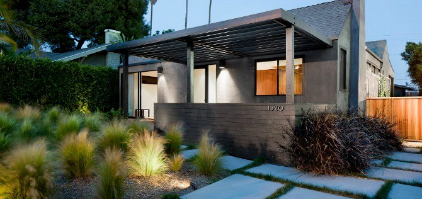
LANDSCAPE UPLIGHTING: You can make your garden "an evening event" with the artistic use of illumination - to highlight some of your prized plants, and to create nighttime drama with shadows, writes Janet Hall. Gardenista ❦
______________________________________________
WAKAYAMA FARM: In this radio show, journalist Nick Luscombe travels north of Tokyo to visit owner Tarao Wakayama and his sons, and learns how the Japanese farm bamboo for architecture and food. (22 minutes) BBC Radio ❦
______________________________________________
ROOT PRUNING A POTTED PLANT: expert gardener Lee Reich believes in pruning the roots of outdoor potted plants every few years. In this video he shows how it's done. Reich ❦
THE AUSTIN GARDEN relies on readers for support. Whether annual or monthly, all donations are welcome. At present 7 % of readers fund this newsletter. Many thanks in advance. PayPal link ❦
 My Quest for . . .
the Hottest Pepper
by Chris Winslow
My interest in hot peppers began about 25 years ago. A good friend from Hondo, TX, well known for his hot sauces and salsas, asked if I would grow some habanero peppers for him.
He handed me some seeds, and as the plants grew and flourished and produced an amazingly bountiful crop, I started to understand just how much fun growing these plants could be. Before long I was on the road to growing the hottest peppers I could find.
The heat measurement of peppers is referred to in Scoville units. Measured now with high-performance liquid chromatography, these units of heat intensity were originally formulated by the American pharmacist Wilber Scoville to measure the level of pure capsaicin within hot peppers.
Sweet peppers scored zero on the Scoville scale, while a jalapeño might score 3,000 Scovilles – meaning it would have to be diluted 3,000 times till no heat was detected. Some of our favorite peppers score as follows:
In the 1,000 to 3,000 range we have Anaheims (New Mexico chilis) and poblanos. From 3,000 to 10,000 we have jalapeños. Above 10,000 - serranos, tabascos, cayennes, Thai, and chili pequins.
Then there is a large gap, and we find the orange habaneros scoring around the 200,000 Scoville units. It was here that I learned of the chocolate and red Caribbean variety that were easy to grow and twice as hot as the standard orange.
Then along comes the red and yellow scotch bonnets scoring a whopping 400,000 Scovilles.
Within the last 4 years a ghost pepper from Bangladesh and India has found its way to my door. Also called bhut jolokia or naga pepper, these devils score 1,000,000 on the Scoville scale. Dangerous I’d say. Handle with care!
This year an even hotter pepper has come along. Known as theTrinidad scorpion, it has the sting of 1,400,000 Scovilles.
I thought that was about as hot as you could get until I heard of Australian hybridizer Butch Taylor. He has produced a Trinidad Scorpion called the Butch T. This pepper is hitting the 2,000,000 mark on the Scoville scale… and should hold the record for at least a little while as the hottest pepper on the planet.
I don’t know what’s next but I’m pretty sure a hotter pepper is on the horizon. P.S. My Trinidad Scorpion Butch T peppers are up and smiling at the sunshine.
Happy hot pepper gardening, everyone!
 |
|
IT'S ABOUT THYME LEGACY PUBLICATIONS.
CONTACT EDITOR DARREL MAYERS |
|
|